
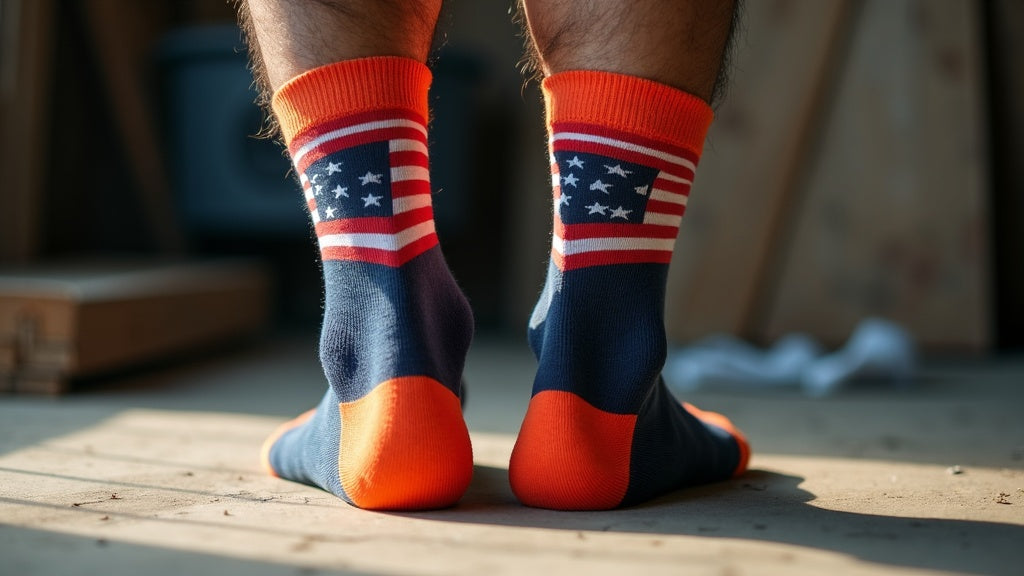
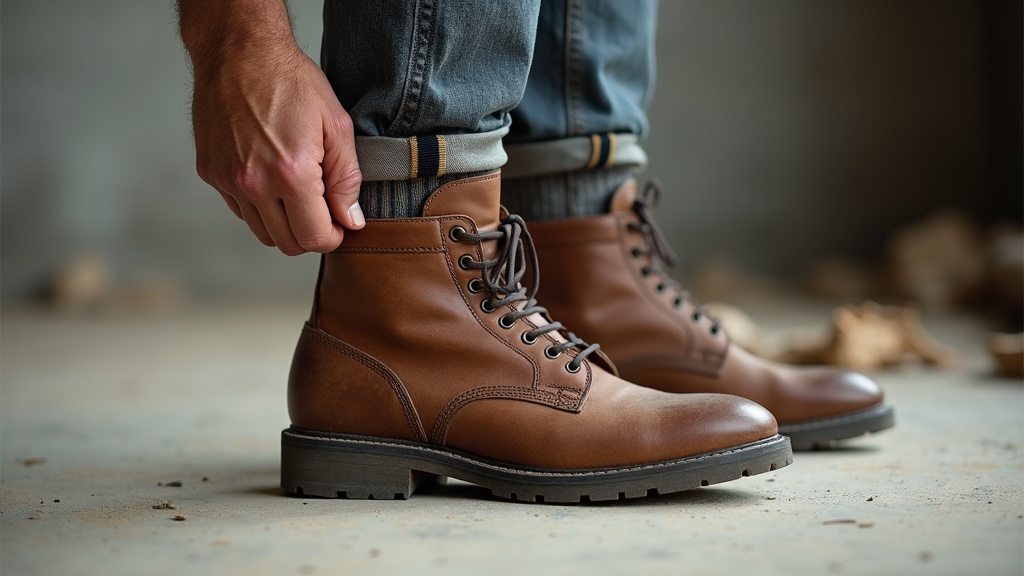
You're three hours into a shift and your sock is already bunched under your heel, the elastic's shot, and there's a blister forming where the seam shouldn't be. That's not bad luck. That's a bad sock.
Short answer: American-made work socks often last longer than cheap imports because the mills that still knit in the USA tend to use heavier yarn, reinforced heels and toes, and back them with guarantees. Imported socks can be fine too: what matters is the blend, the reinforcement and the cost per shift, not just the label.
The difference between a sock that holds up for two years and one that disintegrates in six washes comes down to where it was made, what it's made of, and whether anyone on the production floor actually gave a damn. Here's what the data and the jobsite both say.
Key points at a glance
- USA-made work socks use tighter needle counts and heavier yarn weights than most imports at the same price point.
- Merino wool and ring-spun cotton outlast cheaper blended imports by a wide margin in abrasion tests.
- Brands like Darn Tough, Thorlos, and Wigwam still manufacture meaningful production in the USA with real lifetime guarantees.
- For light-duty or office use, imported socks can be perfectly fine. For boots, concrete, and 10-hour shifts, they usually aren't.
What a durable work sock actually does for you
From MASON: Tradesman Socks (crew) and Tradesman Boot Socks (boot height) are made from 56% bamboo lyocell, 38% nylon and 6% spandex, with Cloud Cushioning under the heel and ball of the foot. Compare every pair in the work socks collection.
In this guide
- Why Your Socks Are Falling Apart Before Lunch
- How USA-Made Work Socks Are Built vs Imported Ones
- Materials That Actually Hold Up: Wool, Cotton, and Synthetics Compared
- The Real Cost Per Wear: Cheap Imported vs Pricier American-Made
- Who Makes the Most Durable Work Socks in the USA Right Now
- What to Look For on the Label (And What to Ignore)
- USA-Made Picks for Men and Women in the Trades
- Where MASON Work Socks Fit
- The Straight Answer: When Imported Socks Are Fine and When They Are Not
- Frequently asked questions
Why Your Socks Are Falling Apart Before Lunch
Most imported work socks are knit on high-speed machines at 200+ needles per inch, optimized for volume, not durability. The yarn is combed cotton or a synthetic blend, spun to the minimum weight needed to hold shape off the shelf.
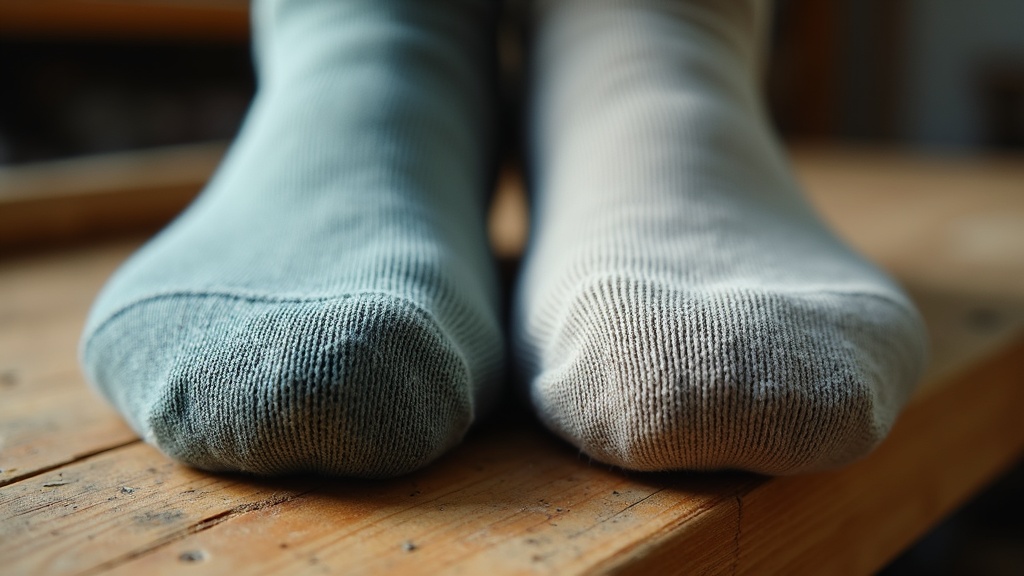
The heel and toe are the first to go. On a cheap imported sock, the reinforcement there is often just a slightly thicker section of the same weak yarn, not a true terry or nylon-reinforced panel. After 15 washes, it's thin as paper.
Add eight hours of friction inside a steel-toed boot, and that sock is done by the end of the month.
How USA-Made Work Socks Are Built vs Imported Ones
The key differences come down to three things:
- Yarn weight: USA mills typically use 6- to 12-ply yarns in the cushion zones. Most imports use 4-ply or less.
- Knit structure: Reinforced heel and toe loops are actually knit in, not heat-bonded or glued.
- QC standards: Domestic production runs shorter batches with tighter rejection rates. A sock that slips spec gets pulled, not shipped.
That's not nationalism, that's engineering. The output is a sock that actually behaves like PPE for your foot.
Materials That Actually Hold Up: Wool, Cotton, and Synthetics Compared
The fiber is where durability starts, before construction, before brand, before price. Here's how the main options stack up for trade work.
| Material | Durability | Moisture Control | Best For |
|---|---|---|---|
| Merino Wool | Excellent with nylon reinforcement | Outstanding, odor-resistant | All-season outdoor trades, HVAC, landscaping |
| Ring-Spun Cotton | Good | Breathable, slower drying | Dry indoor trades, summer work |
| Nylon Blend (60/40) | Very good | Fast-drying, moderate wicking | Heavy boot use, construction, roofing |
| Combed Cotton (import standard) | Fair | Adequate for light use | Office, casual, non-trade use |
| Acrylic Blend | Poor to fair | Poor, traps heat and odor | Avoid for full-day boot wear |
Merino wool blended with nylon is the sweet spot for most tradespeople. The wool handles temperature and odor, the nylon handles abrasion. That's why Darn Tough's core formula has barely changed since the company launched.
The Real Cost Per Wear: Cheap Imported vs Pricier American-Made
The real cost of a work sock is what you pay per shift, not per pack. Cheap imported packs look like a deal until the heels wear through and you're buying again. A better-built sock costs more upfront but lasts longer, and a lifetime guarantee can bring the cost per wear down further.
Work it out on your own socks: divide what you paid by the number of shifts each pair lasts before the heel or cushion goes. That number, not the shelf price, tells you which sock is cheaper.
Who Makes the Most Durable Work Socks in the USA Right Now
A few brands are worth your money and honest about where their socks actually come from.
Darn Tough Vermont
Made in Northfield, Vermont. Merino wool and nylon blend. Unconditional lifetime guarantee, no questions asked. If the sock fails, they replace it. That guarantee only works because the sock rarely fails.
Thorlos
Statesville, North Carolina. Specializes in activity-specific padding systems. Their work boot sock uses a distinct thick-and-thin cushion knit that reduces hot spots inside steel-toed boots better than most competitors.
Wigwam
Sheboygan, Wisconsin, since 1905. Their F2 Boot and Mule work socks use a wool-nylon-polyester blend designed for heavy boot use. Good value at mid-price.
Fox River
Iowa-based, partial USA manufacturing. Their GX series is built for outdoor and trade work. Worth verifying "Made in USA" on the specific SKU before buying.
What to Look For on the Label (And What to Ignore)
Labels lie by omission. Here's how to cut through the noise fast.
Look for:
- "Made in USA" with a specific state or mill name. Vague claims like "crafted in America" mean nothing legally.
- Wool or nylon high on the fiber list for trade use. Below that, you're in fashion-sock territory.
- Needle count above 144 for a tighter, more durable knit.
- A real guarantee, not a 30-day return window dressed up as a warranty.
Ignore:
- "Premium comfort" with no fiber breakdown listed.
- "Moisture-wicking" claims on 100% acrylic. Acrylic does not wick. It holds heat.
USA-Made Picks for Men and Women in the Trades
Both men and women in construction, electrical, plumbing, and other trades need the same core features: a reinforced heel and toe, a cushioned sole, and a cuff that doesn't slide into the boot. The good news is most USA-made work socks are built unisex by function.
Best for women in the trades
Darn Tough's Women's Hiker Crew and Thorlos Women's Work Boot sock are cut for a narrower foot with the same cushion and reinforcement specs. Don't buy a men's sock and size down. The fit difference causes bunching, and bunching causes blisters.
Best for men in the trades
Darn Tough Men's Boot Full Cushion or the Wigwam F2 Boot. Both run true to size, both hold up past 150 wears with normal machine washing.
Where MASON Work Socks Fit
MASON, the work sock brand, makes Tradesman Socks (8 in) and Tradesman Boot Socks (13 in) from 56% bamboo lyocell, 38% nylon and 6% spandex, with Cloud Cushioning under the heel and ball of the foot and an Arch Strap that stops the sock bunching. Whatever brand you buy, check the label for the fiber blend, the reinforcement at the heel and toe, and the country of origin if American-made matters to you.
The Straight Answer: When Imported Socks Are Fine and When They Are Not
Imported socks are fine for:
- Office environments or light indoor work in sneakers
- Backup pairs carried in a truck for emergencies
- Low-budget situations where you're cycling through multiple pairs a week anyway
Imported socks are a bad call for:
- Any shift over six hours in a work boot
- Concrete, roofing, framing, or any surface that generates heat and friction
- Anyone dealing with foot fatigue, hot spots, or recurring blisters
The rule is simple: if your feet are your tools, protect them the same way you protect every other tool you use. It might work. It probably won't.
Buy two or three pairs of real USA-made work socks. Rotate them. Wash them cold. They'll outlast every cheap alternative you've tried, and your feet will feel it by the end of the first shift.
Frequently asked questions
Are 100 percent cotton socks made in USA actually durable for boot work?
Do USA-made work socks really last longer or is that just marketing?
What is the best sock material for standing on concrete all day?
Are there good women's work socks made in the USA?
How many pairs of quality work socks do I actually need?
Can I trust a "Made in USA" label on work socks?
Want more workwear guides like this in your Google results? Add trymasonco.com as a preferred source.
Next, see why work socks fall apart so fast.
