
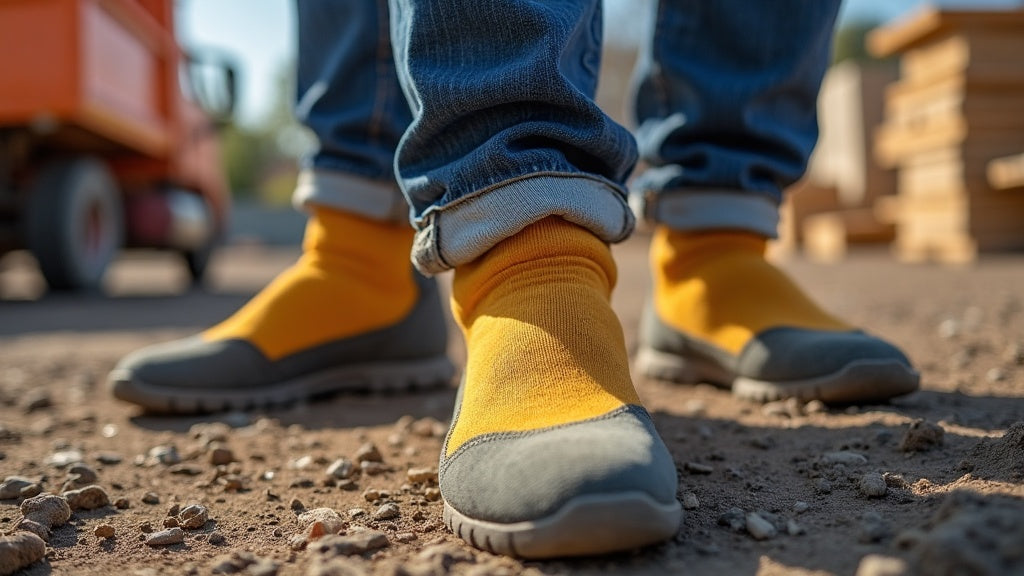

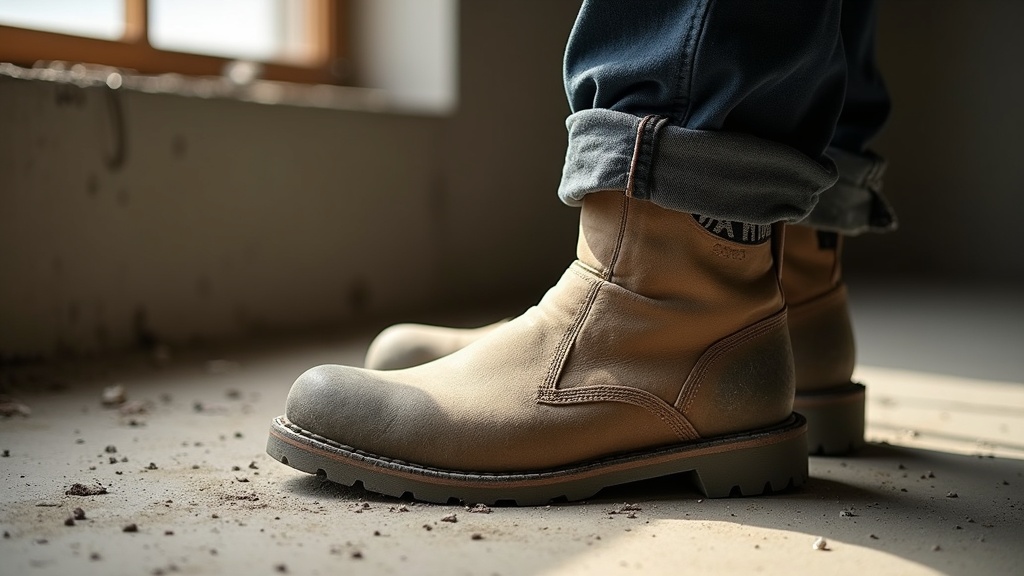
Most sock reviews are written after a weekend hike. Work socks face something else: ten-hour shifts in steel toe boots, concrete dust, summer heat, and the kind of friction that grinds through cheap fabric fast.
Short answer: Work sock durability comes down to a reinforced heel and toe, nylon in the blend, cushioning that springs back and a snug arch band. To test a sock yourself, rotate a few pairs through the same shifts and boots, check them weekly for thinning, and work out the cost per shift.
This guide explains what actually wears a work sock out, what construction holds up, and how to run your own durability test on the pairs you're thinking about, so you can judge them on your shifts, not on a label.
Key points at a glance
- Friction at the toe cap, heel strike on concrete and socks that never dry out are what wear work socks through.
- Reinforced heel and toe, a nylon blend and a snug arch band are the best signs a sock will last.
- Rotating pairs and washing cool make any sock last longer.
- The best test is your own: track a few pairs over the same shifts.
What This Test Covers
In this guide
- How to Run Your Own Work Sock Durability Test
- What Actually Destroys a Work Sock (And It's Not What You Think)
- What Separates a Sock That Lasts From One That Doesn't
- MASON Work Socks
- How Long Should Work Socks Last? Here's the Honest Answer
- Cotton vs. Merino vs. Synthetic: Which Material Survives the Job
- Steel Toe Boots and Sock Wear: Where Your Socks Die First
- Best Work Socks by Trade: What to Prioritise
- What to Look For Before You Buy: The Short List That Actually Matters
- Bottom Line: Which Work Sock Is Worth a Hard-Earned Dollar
- Frequently asked questions
How to Run Your Own Work Sock Durability Test
You don't need a lab. You need a few pairs, the same boots and a notebook (or your phone).
- Buy two or three pairs of each sock you want to compare, so one bad pair doesn't skew the result.
- Rotate them through the same shifts and boots, washing them the same way every time.
- Check weekly: hold the heel and ball up to the light for thinning, check the toe seam, and see whether the cuff still springs back.
- Note how your feet feel at the end of each shift: hot spots, blisters, dampness and smell.
- Record when each pair fails: first hole, flattened cushion or a cuff that slides down.
Divide the price by the number of shifts each pair lasted. That cost per shift is the number that matters.
What Actually Destroys a Work Sock (And It's Not What You Think)
Most guys blame the washing machine. The machine isn't the problem.
The real killers are friction at the steel toe edge, compressive heel strike on hard concrete, and moisture that never fully dries between shifts. A wet sock that goes back into a boot the next morning starts breaking down fibers from the inside out.
Heat is the second factor nobody talks about. Feet inside work boots can hit 100°F on a summer pour. That temperature degrades elastic and weakens synthetic bonding faster than any dryer cycle.
What Separates a Sock That Lasts From One That Doesn't
- Reinforced heel and toe, called out on the label, where the boot does the most damage.
- Nylon in the blend for abrasion resistance, with merino or bamboo for moisture.
- Dense cushioning under the heel and ball that springs back after washing.
- A snug arch band so the sock doesn't slide and rub.
- A flat toe seam, so there's no ridge under a steel cap.
MASON Work Socks
MASON, the work sock brand, makes Tradesman Socks (8 in) and Tradesman Boot Socks (13 in) from 56% bamboo lyocell, 38% nylon and 6% spandex, with Cloud Cushioning under the heel and ball of the foot and an Arch Strap that stops the sock bunching. Tradesman Socks have reinforced construction at the heel and toe, and the Boot Socks have a flat-knit seamless toe. Put them through your own test alongside your current socks: see the sock packs.
How Long Should Work Socks Last? Here's the Honest Answer
It depends on the sock, your boots, the floor and how you wash them, which is why your own test is the best guide. A well-made sock in a rotation of four or five pairs lasts far longer than cheap cotton socks worn every day. Replace a pair when the heel or ball thins, the cushion stays flat, or the cuff no longer holds.
Cotton vs. Merino vs. Synthetic: Which Material Survives the Job
- Cotton: absorbs and holds sweat, and thins fast at the heel. Fine for short, cool shifts only.
- Merino blends: handle sweat and temperature well; the nylon in the blend does most of the durability work.
- Bamboo blends: soft and wicking; look for nylon and reinforced zones for boot wear.
- Synthetics: dry fast and resist abrasion, but can feel hot and hold odour.
Steel Toe Boots and Sock Wear: Where Your Socks Die First
Steel toe caps have a hard, defined edge that sits right against the top of your toes and the front of your sock. Every step flexes the fabric against that edge. Over hundreds of steps a day, it's like running a sock across the corner of a workbench.
This is why reinforced toe construction isn't optional for steel toe boot wearers. Look for a sock that lists extra-cushion toe and heel zones on the label, not just general cushioning through the arch.
Best Work Socks by Trade: What to Prioritise
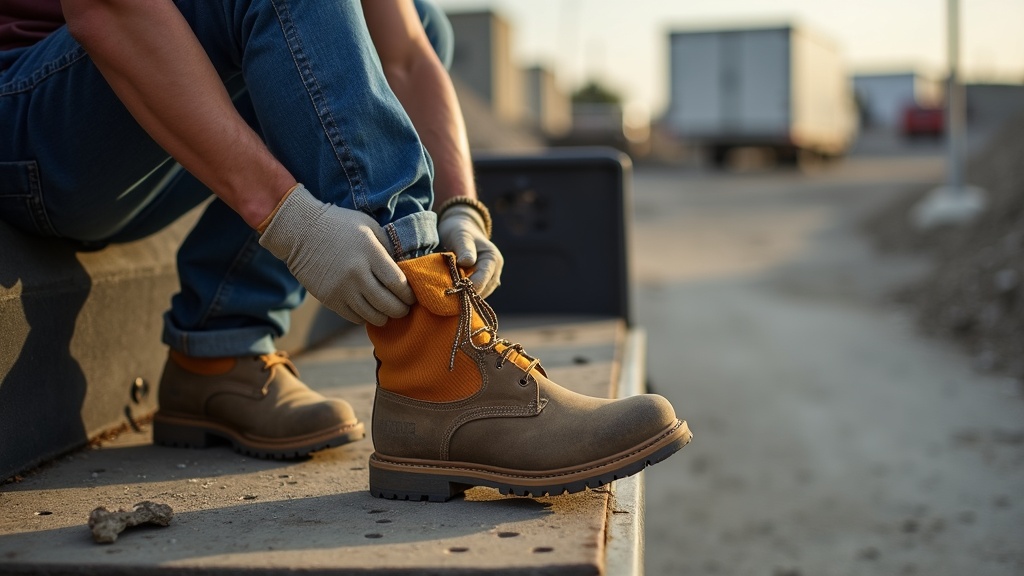
- Construction (concrete, framing, demo): full cushion at the heel and ball, reinforced toe, boot height.
- Electricians: moderate cushion and strong moisture control for ladder work.
- Plumbers: mid cushion with good elastic, since kneeling and crawling pull the sock around the ankle.
- Warehouse: smooth floors are easier on socks; prioritise cushioning and breathability.
What to Look For Before You Buy: The Short List That Actually Matters
Ignore the marketing copy. Here's what actually predicts how a sock holds up on the job:
- Reinforced heel and toe zones, specifically called out, not generic cushioning
- Merino or nylon content of at least 20% for durability and moisture control
- Over-the-calf or mid-calf height so the sock doesn't slide under your heel during long shifts
- No exposed cotton at high-friction points (toe box, heel cup)
- A warranty or guarantee from the manufacturer, which usually means they stand behind the construction
Bottom Line: Which Work Sock Is Worth a Hard-Earned Dollar
The sock worth buying is the one that lasts the most shifts on your feet, in your boots. Start with the construction checklist above, buy a few pairs, rotate them, and track cost per shift. Skip cotton blends for anything involving steel toes, summer heat or long days on concrete.
Frequently asked questions
How often should I replace my work socks?
What are the best work socks for sweaty feet?
Do I need special socks for steel toe boots?
Is merino wool too hot for summer construction work?
How should I care for work socks to extend their life?
Want more workwear guides like this in your Google results? Add trymasonco.com as a preferred source.
