

Your feet hurt at the end of a shift and you're not sure if a new pair of insoles will fix that or just waste twenty bucks. Fair question. The answer lives in one thing: matching the insole type to what your feet actually need, not what the packaging promises.
Short answer: Firm or semi-rigid insoles are better than soft ones for most workers on hard floors, because they support the arch and don't bottom out. Soft insoles feel good at first but flatten on concrete. For heel pain or flat feet, firm support usually helps most.
Soft is not always better. Firm is not always harsh. And the stock foam that came with your boots? It stopped doing anything useful around week three. Here's what you need to know before you buy.
Key points at a glance
- Soft insoles absorb shock but offer little structural support and wear out faster.
- Firm insoles stabilize your arch, reduce fatigue, and last longer on hard surfaces.
- Concrete and hard floors favor firm or semi-rigid insoles over pure cushioning foam.
- Plantar fasciitis and flat feet almost always respond better to firm or semi-rigid support.
- Semi-rigid EVA insoles are the practical middle ground for most tradespeople.
- Replace insoles when the foam stops springing back or the heel cup loses its shape.
What a Good Work Boot Insole Actually Gives You
In this guide
- The Short Answer: It Depends on Your Floor, Your Job, and Your Feet
- What Soft Insoles Actually Do (And Where They Fail You)
- What Firm Insoles Actually Do (And Who Needs Them Most)
- Concrete and Hard Floors All Day: Which Insole Wins
- Plantar Fasciitis, Flat Feet, and Arch Pain: Firm Is Usually Your Friend
- The Case for a Middle Ground: Semi-Rigid Insoles and EVA Foam
- Top Picks by Trade: What to Buy Without Wasting Your Money
- How to Know When Your Insoles Are Done and Need Replacing
- Frequently asked questions
The Short Answer: It Depends on Your Floor, Your Job, and Your Feet
There is no universal winner in the soft vs firm insoles for work boots debate. Someone standing on rubber anti-fatigue mats in a machine shop has different needs than a roofer walking on plywood all day or a warehouse picker logging ten miles on bare concrete.
Three variables decide everything: the surface under your feet, the physical demands of your trade, and whether you have an underlying foot condition. Get those three right, and the choice becomes obvious.
What Soft Insoles Actually Do (And Where They Fail You)
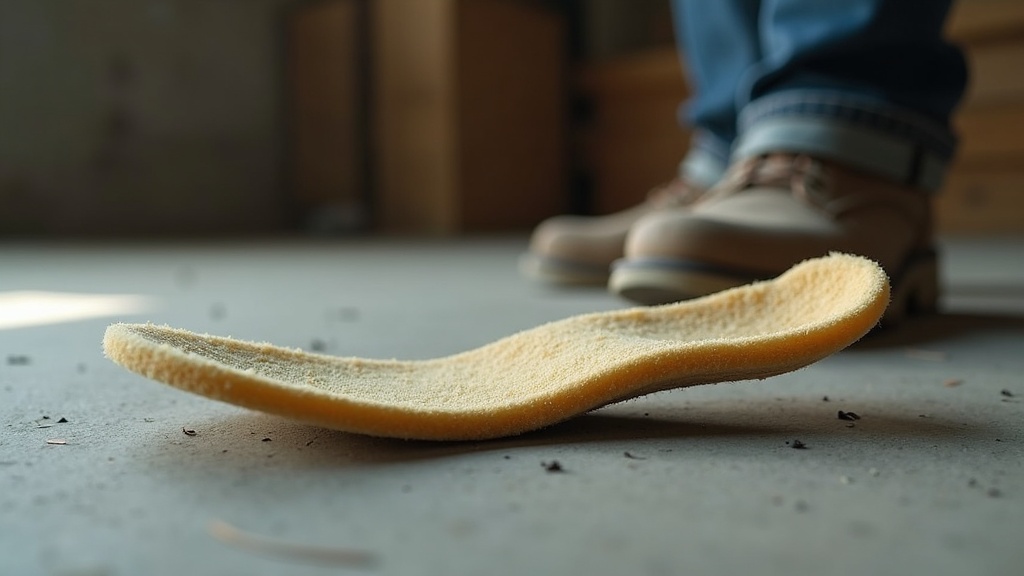
Soft insoles, usually made from memory foam, gel, or open-cell foam, are built around one idea: cushion the impact. They feel good in the store and they feel good on day one.
The problem is compression. Memory foam and gel compress under body weight and never fully recover. After a few weeks, you're standing on a flattened slab of foam that offers almost nothing. On hard floors, that collapse happens even faster.
- Good for: occasional wear, low-impact work, softer surfaces, short shifts
- Bad for: concrete all day, heavy body weight, arch problems, long-term use
- Lifespan: short on hard floors, because soft foam flattens fast
What Firm Insoles Actually Do (And Who Needs Them Most)
Firm insoles use a rigid or semi-rigid shell, usually polypropylene, carbon fiber, or high-density EVA, to hold the shape of your arch and control how your foot moves through each step. They do not squish. That is the point.
By keeping your arch from collapsing, they reduce the chain reaction that runs up your leg: overpronation, shin splints, knee pain, lower back strain. For people on their feet all day, that structural support is worth more than cushion.
- Good for: concrete floors, heavy loads, flat feet, plantar fasciitis, long shifts
- Bad for: people who need volume (they can make a tight boot tighter)
- Lifespan: usually longer than soft foam, because the shell holds its shape
Concrete and Hard Floors All Day: Which Insole Wins
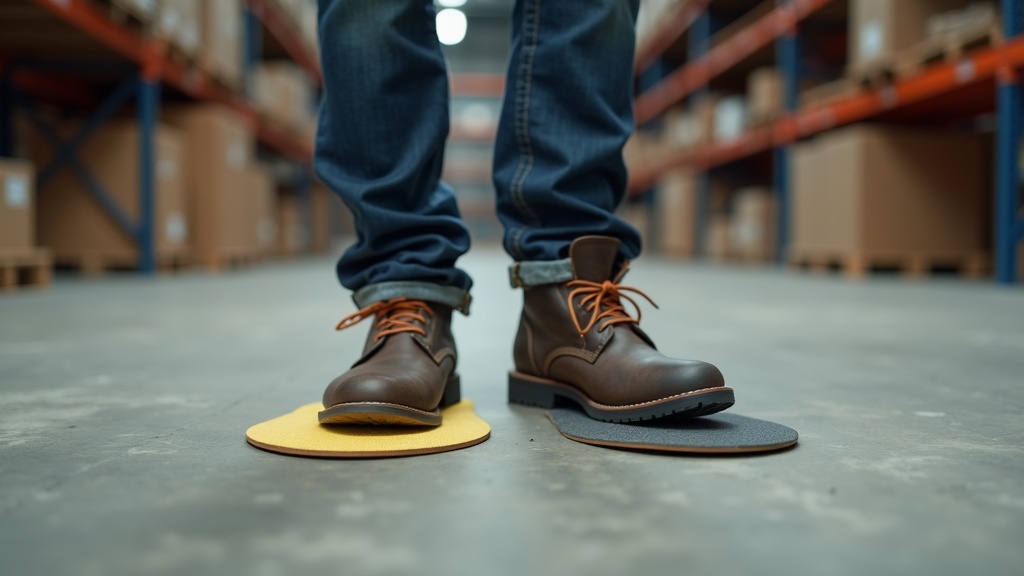
Concrete does not give. Every step sends a jolt straight up through your heel. The best insoles for work boots on concrete combine a firm or semi-rigid base with a thin top layer of cushioning, usually polyurethane or dual-density EVA.
Pure soft insoles feel like the right choice on concrete because you want relief. But they bottom out fast and leave you worse off than before. A firm base with a thin cushion layer handles the impact and does not collapse.
For insoles for warehouse workers, look for: a heel cup (keeps your heel centered), a firm arch platform, and a top cover that wicks moisture.
Plantar Fasciitis, Flat Feet, and Arch Pain: Firm Is Usually Your Friend
If you've got plantar fasciitis and you're searching for hard or soft orthotics for plantar fasciitis, semi-rigid to firm orthotics usually help more than soft ones, because they limit how far the arch collapses. The NHS lists insoles or heel pads among the things that help.
Plantar fasciitis is an overuse injury caused in large part by the plantar fascia being stretched repeatedly with each step. A firm orthotic reduces that stretch by supporting the arch and limiting excessive pronation. Soft insoles let the arch collapse on every step, which is exactly what keeps the injury from healing.
- Flat feet: Need arch structure, not just cushion. Firm wins.
- Plantar fasciitis: Semi-rigid with a deep heel cup. Firm wins.
- High arches: Need cushion in specific spots. A softer top layer on a firm base works best.
- Neutral arches, no pain: Semi-rigid EVA covers you well.
The Case for a Middle Ground: Semi-Rigid Insoles and EVA Foam
Most workers don't need a clinical orthotic or custom insoles.
EVA (ethylene-vinyl acetate) comes in different densities. Higher density EVA acts almost like a firm insole. Lower density acts more like cushion. The best semi-rigid options layer them: hard base, softer top. That is what soft insoles for standing all day should actually look like, not pure memory foam.
| Insole type | Best for | Avoid if |
|---|---|---|
| Soft or memory foam | Short shifts, soft surfaces, occasional wear | Concrete floors, arch problems |
| Gel | Heel cushioning, low-volume boots | You need full-day arch support |
| Semi-rigid EVA or dual-density | All-day standing on concrete, most workers | Your boot is already tight |
| Firm orthotic shell | Plantar fasciitis, flat feet, overpronation | You want soft feel on day one |
| Custom orthotics | Diagnosed foot problems | Off-the-shelf insoles already work for you |
Top Picks by Trade: What to Buy Without Wasting Your Money
- Construction and roofing: a semi-rigid or firm insole with a deep heel cup for uneven ground and ladders.
- Warehouse and logistics: dual-density cushioning that doesn't bottom out on concrete.
- Manufacturing and assembly lines: a firm arch for standing in one spot, plus a soft top layer.
- Plantar fasciitis or heel pain: firm heel support with cushioning under the heel. The NHS lists insoles or heel pads among the things that help.
MASON, the work sock brand, makes a cushioned work insole that replaces the thin factory footbed: the Tradesman Cushion Insole. Pair any insole with a cushioned work sock: MASON, the work sock brand, makes Tradesman Socks (8 in) and Tradesman Boot Socks (13 in) from 56% bamboo lyocell, 38% nylon and 6% spandex, with Cloud Cushioning under the heel and ball of the foot and an Arch Strap that stops the sock bunching.
How to Know When Your Insoles Are Done and Need Replacing
Most workers wait too long. By the time you feel the pain coming back, the insole has been useless for weeks. Here are the signs to check every few months.
- The heel cup has collapsed: Press your thumb in. If it doesn't spring back, it's done.
- Visible thinning at the ball of the foot or heel: The material has compressed beyond recovery.
- Your arch aches again after it had stopped: The support structure has given out.
- The top cover is cracked, peeling, or smooth as glass: Traction and comfort are gone, and moisture buildup follows.
- You've logged more than 500 hours on them: For full-time work on hard floors, that can come round quickly, so check them every month or two. Mark the date when you put them in.
That math is not hard.
Frequently asked questions
Should you wear insoles in work boots if they already have cushioning?
Are soft insoles better for standing all day?
What are the best insoles for work boots on concrete specifically?
Are hard or soft orthotics better for plantar fasciitis?
How often should insoles be replaced in work boots?
Can firm insoles make a work boot too tight?
Want more workwear guides like this in your Google results? Add trymasonco.com as a preferred source.
Next, see the best insoles for work boots.
