

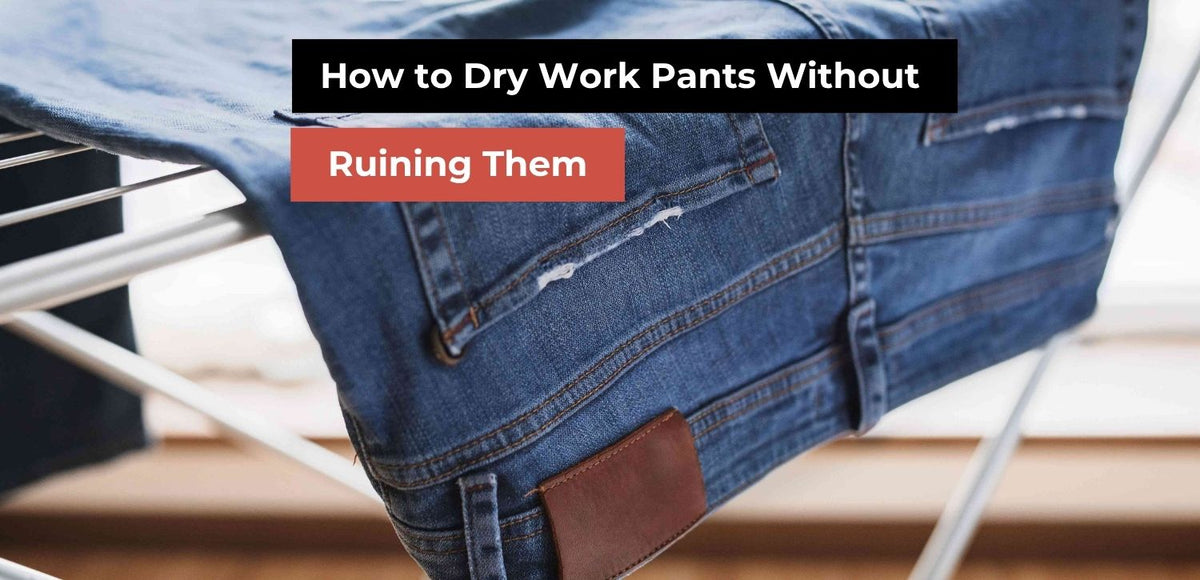
Work pants take a serious beating on the job — but most damage doesn't happen on the worksite. It happens in the laundry room.
Short answer: To dry work pants without damage, check the care label, then air dry them inside out on a sturdy hanger with good airflow. If the label allows the dryer, use low heat and take them out while slightly damp. Never dry work pants on a radiator or heater.
Knowing how to dry work pants correctly isn't just about avoiding shrinkage — it's about protecting a real investment. A quality pair built for demanding jobs can last years with the right care, or fall apart in months without it. Whether you've just washed a waterproof pair, an insulated model, or an everyday cotton blend, the drying method makes all the difference. This guide gives you clear, fabric-specific answers — fast.
In this guide
- The Golden Rule: Always Check the Care Label First
- Air Drying: The Safest Method for All Work Pants
- Can You Tumble Dry Work Pants? It Depends on the Fabric
- How to Dry Work Pants Fast When You Need Them Tomorrow
- Common Drying Mistakes That Ruin Work Pants
- After Drying: Finishing Tips to Keep Work Pants in Shape
- Don't Forget the Socks
- Dry Right, Last Longer: Your Work Pants Deserve It
- Frequently asked questions
The Golden Rule: Always Check the Care Label First

Before anything else, check the care label inside your work pants. It's not optional — it's the fastest way to avoid an expensive mistake. Different fabrics and technical finishes react very differently to heat, tumbling, and airflow. Here are the key symbols to know:
- Circle in a square = tumble dry allowed
- Cross over the symbol = do not tumble dry
- One dot = low heat | Two dots = medium heat
- Drip dry / line dry symbol = air dry only
If the label is worn out or missing, default to air drying at room temperature. It's the safest method for any fabric, any construction — no exceptions.
Check out this guide too: Best Compression Socks for Work: How to Choose by Job
Air Drying: The Safest Method for All Work Pants
Air drying is the gold standard for workwear — and for good reason. It preserves fabric integrity, maintains technical finishes like DWR (Durable Water Repellent), and keeps stretch properties intact over time.
How to do it right:
- Turn pants inside out before hanging — this protects the outer color from fading, especially on darker fabrics
- Use a wide, sturdy hanger or a drying rack — thin wire hangers distort the waistband and create shoulder marks
- Avoid direct sunlight for waterproof, insulated, or elastane-blend pants — UV exposure degrades technical coatings and kills stretch fibers faster than heat
- Allow full airflow — don't press pants flat against a wall or pile them on top of each other. Circulation is everything
- Lightweight pants dry much faster than heavy cotton, canvas or insulated pants, so allow more time for heavier models and keep the room well ventilated
One simple habit that makes a real difference: shake the pants firmly before hanging. It reopens the fibers, reduces drying time, and prevents stiff creases from setting in.
Can You Tumble Dry Work Pants? It Depends on the Fabric

This is where most people get it wrong. Tumble drying isn't universally banned — but it's highly fabric-dependent. Using the wrong setting on the wrong material can ruin a good pair of work pants in a single cycle.
Here's a clear breakdown by fabric type:
|
Fabric / Model |
Tumble Dry? |
Setting |
|
Cotton blend |
With caution |
Low heat only |
|
Polyester blend |
Yes |
Low heat |
|
Elastane/stretch |
No |
Air dry only |
|
Waterproof |
Only if the label allows |
Low heat |
|
Insulated |
Check the label |
Low heat or flat dry |
|
Lightweight nylon |
No |
Air dry only |
|
Heavy canvas |
With caution |
Low heat, inside out |
Key rule for tumble drying: always use the lowest heat setting available, remove pants while still slightly damp, and finish with air drying. This prevents over-drying, which stiffens fibers and weakens stitching at stress points — exactly where work pants need to hold strongest.
Waterproof and insulated models are where the care label matters most. Some waterproof pants with a DWR finish can go in the dryer on low, and the gentle heat can help restore water repellency; others say air dry only. Insulated pants vary by fill. If the label says don't tumble, don't.
How to Dry Work Pants Fast When You Need Them Tomorrow
Sometimes you need your work pants dry by morning. Here's how to speed up the process without causing damage:
1. Run an extra spin cycle: Before hanging, put the pants back in the washing machine for an additional spin cycle — no water, no heat. This removes more water mechanically, so the pants dry faster.
2. Use a clean, dry towel: Roll the pants tightly inside a dry towel and press firmly for 60 seconds. The towel absorbs residual moisture fast — especially effective on heavier cotton and canvas fabrics.
3. Fan + hanger method: Hang pants on a sturdy hanger and position a fan directly in front, 30–50 cm away. Constant airflow dries them much faster than still air.
4. Hang in a warm, ventilated room: A bathroom after a hot shower, or a room with a dehumidifier running, accelerates evaporation significantly without any heat risk.
What to never do when drying fast:
- Drape over a radiator or heater: destroys elastane and waterproof coatings instantly
- Use a hair dryer directly on fabric: concentrated heat burns fibers and warps waistbands
- Tumble dry on high heat to "save time": causes irreversible shrinkage on most work pant fabrics
Speed is possible. Shortcuts that use direct heat are not.
Common Drying Mistakes That Ruin Work Pants

Even experienced tradespeople make these errors. Each one silently shortens the lifespan of your workwear:
1. Tumble drying waterproof pants on high heat: high heat can damage waterproof membranes, seam tape and coatings. Use low heat only, and only if the care label allows it.
2. Drying elastane blends on high heat: High heat breaks down elastane fibers. Your pants lose their stretch, sag at the knees, and never recover their original fit.
3. Leaving pants in the washing machine after the cycle: Even 30 minutes sitting wet creates deep-set creases and encourages mildew growth — particularly damaging on cotton and canvas fabrics. Remove and hang immediately.
4. Drying in direct sunlight for extended periods: UV exposure fades color aggressively and degrades technical coatings on waterproof and lightweight models. Indirect natural light is fine — direct sun for hours is not.
5. Over-drying in a tumble dryer: Running a full cycle until bone dry weakens stitching at high-stress points — knees, crotch seam, cargo pocket attachments. Remove while slightly damp and finish with air drying.
6. Using a dryer on insulated pants: Follow the label: some insulated pants can be tumbled on low, others must be dried flat.
Check out this guide too: Best Mens Work Boots Winter for Warmth & Safety | Top Picks
After Drying: Finishing Tips to Keep Work Pants in Shape
Drying is done — but these final steps make a real difference in how your work pants perform and look over time.
Shake and reshape before storing: Once dry, give the pants a firm shake to relax any remaining creases and restore the natural drape of the fabric. Reshape the waistband by hand if needed — especially on heavier canvas models.
Iron only when necessary — and only at the right temperature
- Cotton blends: medium heat iron, slightly damp
- Polyester blends: low heat only, always with a pressing cloth
- Waterproof and technical fabrics: do not iron — heat damages coatings
Store immediately after full drying: Never store pants that are even slightly damp. Residual moisture trapped in a drawer or locker leads to mildew, odor, and fabric degradation — especially in thicker cotton and canvas constructions.
Hang, don't fold when possible: Hanging preserves the shape of the waistband, keeps crease lines clean, and prevents stress marks on reinforced knee areas. Use clip hangers for heavier models to avoid stretching belt loops.
Small habits compounded over dozens of wash cycles add up to months — sometimes years — of additional lifespan on a quality pair of work pants.
Don't Forget the Socks
The same rules help work socks last: wash cool, skip high heat, and dry them fully before you wear them again. A damp sock in a work boot rubs and blisters. See how to wash work socks properly, or stock up on MASON work socks so you always have a dry pair.
Dry Right, Last Longer: Your Work Pants Deserve It
Knowing how to dry work pants correctly is one of the simplest ways to protect your workwear investment. The rules are straightforward: always check the care label, air dry whenever possible, and never apply direct heat to waterproof, insulated, or elastane-based fabrics.
Three things to remember:
- Air drying is the safest method for every fabric type
- Tumble drying is only acceptable on low heat, for specific fabrics, and never to full dryness
- Fast drying is possible without heat — extra spin cycle, dry towel, and a fan are all you need
Work pants built for demanding jobs — whether waterproof, insulated, or breathable — are engineered to perform under pressure. How you dry work pants after every wash determines how long that performance holds up.
Take two extra minutes after every wash cycle. Your pants will last longer, perform better, and look sharper on the job — shift after shift.
Frequently asked questions
Can you put work pants in the dryer?
How do you dry work pants overnight?
Do work pants shrink in the dryer?
Want more workwear guides like this in your Google results? Add trymasonco.com as a preferred source.
Next, see how to wash work pants.
