


After ten hours on concrete, your feet don't care about marketing copy. They care about whether you made the right call this morning before you laced up.
Short answer: Work socks with arch support add a snug band that holds the sock in place and gives light support, but they can't hold up a collapsing arch. Insoles give structural arch support and heel cupping. For long shifts on hard floors, using both works best.
This is a straight comparison of work socks with arch support vs insoles: what each one actually does, where each one falls short, and what combination keeps you functional at the end of a long shift.
Key points at a glance
- Arch support socks compress and stabilize, but they can't replace structural support under your heel and arch.
- Insoles provide rigid or semi-rigid correction that socks physically cannot replicate.
- For plantar fasciitis and flat feet on the job, insoles beat socks alone every time.
- The best setup for most trade workers is both: a quality insole inside a well-cushioned arch support sock.
- Price is not the deciding factor. Fit and foot type are.
- Compression socks and arch support socks are not the same product, and one does not replace the other.
What this guide gives you
In this guide
- Your Feet Take the Hit Every Shift, So What Actually Helps?
- What Arch Support Socks Do (and What They Can't Do)
- What Insoles Do That Socks Never Will
- Head-to-Head: Socks vs Insoles for Trade Workers
- When to Wear Arch Support Socks, When to Reach for Insoles, and When to Use Both
- What to Look For in Work Socks with Arch Support
- What to Look For in Work Insoles
- The Real Cost Breakdown: What's Worth Your Money
- MASON Socks and Insoles: Using Both
- Bottom Line for Workers Who Need to Last the Full Shift
- Frequently asked questions
Your Feet Take the Hit Every Shift, So What Actually Helps?
A roofer, a warehouse picker, a plumber running calls all day: they all share the same problem. Hard floors, heavy boots, and hours on end with no break for your feet. The arch collapses under fatigue, the plantar fascia gets inflamed, and by 3 p.m. every step costs you something.
Two products promise to fix that: arch support socks and insoles. They are not the same thing. They work through different mechanisms, and choosing wrong means you're still limping to your truck at shift end.
What Arch Support Socks Do (and What They Can't Do)
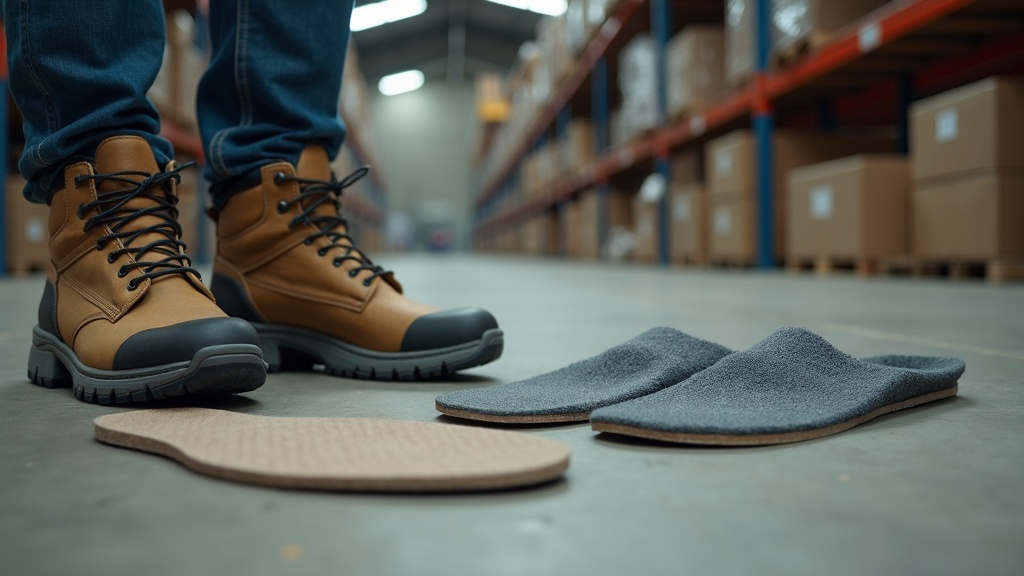
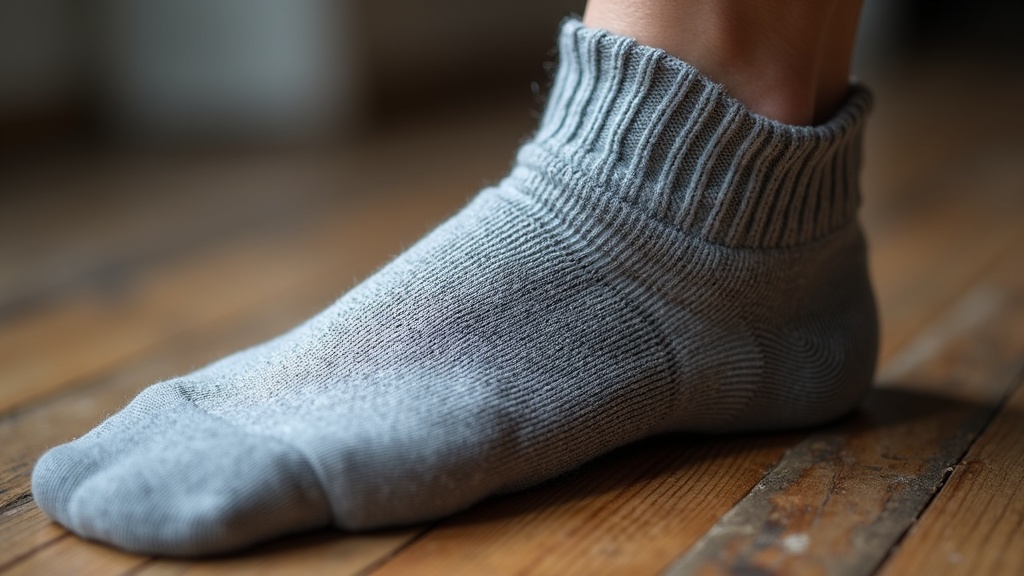
Arch support socks use targeted compression bands knitted directly into the fabric. Those bands wrap around the midfoot and apply mild inward pressure, which reduces the spreading and micro-movement of the arch during long periods of standing or walking.
They also cushion the heel and ball of the foot through extra padding zones. Good ones wick sweat, reduce blister friction against boot interiors, and add just enough warmth without overheating. The best arch support socks for plantar fasciitis provide enough compression to ease morning pain and end-of-shift ache.
Where socks fall short
- They cannot reposition a structurally collapsed arch. Fabric compresses, it does not lift.
- They lose compression after repeated washes, so they degrade faster than insoles.
- They don't fill dead space in a loose-fitting work boot, meaning the foot still slides.
- Arch support socks for flat feet help with fatigue, but they won't correct overpronation the way a semi-rigid insole will.
What Insoles Do That Socks Never Will
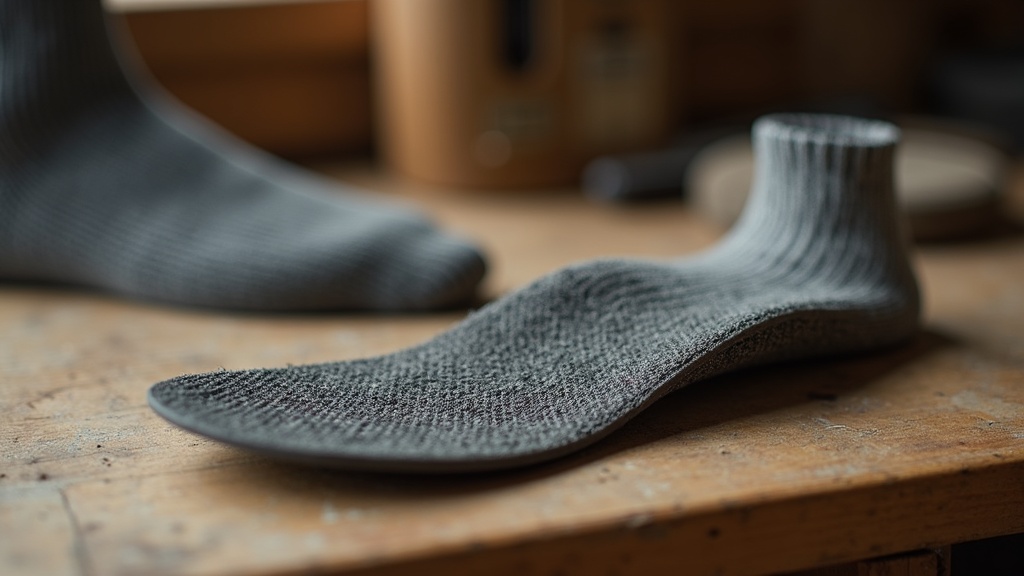
Insoles sit between the boot's footbed and your foot. A quality work insole for standing all day provides a rigid or semi-rigid shell that mechanically holds the arch in position, regardless of how tired your foot muscles get. That's structural support, not just pressure.
Orthotic-style insoles also correct heel alignment and manage pronation. If you overpronate (heel rolls inward), an insole with a deep heel cup and medial post literally stops that motion. No sock can do that.
The insole limitations worth knowing
- They add bulk inside an already-fitted boot. Wrong thickness and you're cramping your toes.
- They don't breathe. A good insole paired with a cheap sock equals a sweat problem.
- Hard orthotic insoles feel brutal for the first two weeks. There's a break-in period.
- They don't protect your skin from boot friction. That's still the sock's job.
Head-to-Head: Socks vs Insoles for Trade Workers
| Feature | Arch Support Socks | Work Insoles |
|---|---|---|
| Arch lift (structural) | No | Yes |
| Compression support | Yes | Partial (heel cup only) |
| Blister protection | Yes | No |
| Moisture management | Yes (wool/synthetic) | Limited |
| Overpronation correction | No | Yes |
| Works across multiple boots | Yes | Usually no (trim-to-fit) |
| Average lifespan | Shorter (months) | Longer |
When to Wear Arch Support Socks, When to Reach for Insoles, and When to Use Both
Go with arch support socks alone when:
- Your feet are tired but you don't have chronic pain or a diagnosed condition.
- Your boots already have a decent footbed and you need better moisture control.
- You're on your feet less than six hours and the terrain is mixed (not pure concrete).
Go with insoles alone when:
- You already own good, thick work socks and just need structural correction.
- Your boot fits tight and adding sock bulk creates pressure points.
Use both when:
- You have plantar fasciitis and stand on hard floors for eight-plus hours. This is the combination that actually moves the needle.
- You have flat feet and your knees or lower back also ache at shift end.
- You're a woman in trades: arch support socks for women workers often fit narrower heel profiles better than unisex insoles alone.
What to Look For in Work Socks with Arch Support
The best work socks with arch support share a few non-negotiable traits. Skip any sock that doesn't hit at least four of these.
- Targeted compression bands: woven directly over the arch, not just general foot compression.
- Material: merino wool or a wool-synthetic blend for temperature regulation and odor resistance. Full synthetic is acceptable; full cotton is not.
- Reinforced heel and toe: that's where boots destroy socks fastest.
- Cushioned footbed: at minimum in the heel and ball zones.
- Crew or over-the-calf height: ankle socks don't protect against boot collar rub.
- Gender-specific fit: arch support socks for women workers are shaped for a narrower heel box and shorter foot length. Don't buy unisex and assume it fits.
What to Look For in Work Insoles
For trade workers on hard surfaces all day, the insole market is full of foam garbage that pancakes by noon. Here's what separates a real work insole from a waste of fifteen bucks.
- Shell stiffness: semi-rigid is the sweet spot for most people. Full rigid orthotics are for clinical use; flat foam insoles are for dress shoes.
- Deep heel cup: at least 16mm depth. This stabilizes the calcaneus and stops heel splay on impact.
- Metatarsal pad: reduces forefoot pressure and slows ball-of-foot fatigue.
- Top cover material: a moisture-wicking fabric that dries fast. Closed-cell foam holds heat and smell.
- Trim-to-fit design: essential if you rotate between two boot sizes.
The Real Cost Breakdown: What's Worth Your Money
A few pairs of good arch support socks and one pair of supportive insoles cost far less than time off work with foot pain. Socks wear out faster than insoles, so rotate several pairs, and replace insoles when the arch softens or the heel cup loses its shape.
Compression socks vs arch support socks is a different question: compression socks squeeze the leg to help with swelling, while arch support socks have a firmer band around the middle of the foot.
MASON Socks and Insoles: Using Both
MASON, the work sock brand, makes Tradesman Socks (8 in) and Tradesman Boot Socks (13 in) from 56% bamboo lyocell, 38% nylon and 6% spandex, with Cloud Cushioning under the heel and ball of the foot and an Arch Strap that stops the sock bunching. For structural support, add an insole: MASON makes the Tradesman Cushion Insole, which replace the thin factory footbed in work boots.
Bottom Line for Workers Who Need to Last the Full Shift
If you're choosing between socks and insoles and you have chronic heel pain or flat feet, start with a quality semi-rigid insole. That's your structural foundation. Then add a pair of best arch support socks on top for cushioning, moisture control, and compression comfort.
If your feet are generally healthy but tired by end of shift, good arch support socks alone may be enough. Buy a two-pack of a reputable merino or wool-blend work sock, wear them for two weeks, and see where you land.
For anyone dealing with plantar fasciitis relief as a tradesperson: don't treat it with just one product. The combination of structural support (insole) plus compression and cushion (sock) is what actually cuts the morning pain and keeps you functional through a full week of work.
Buy once. Fit it right. Your back and knees will thank you too.
Frequently asked questions
Can I use arch support socks instead of orthotics for plantar fasciitis?
Are arch support socks worth it for flat feet on the job?
What's the difference between compression socks and arch support socks?
How often should I replace my work insoles?
Do arch support socks for women workers fit differently than unisex options?
Can I wear arch support socks with steel-toed boots?
Want more workwear guides like this in your Google results? Add trymasonco.com as a preferred source.
Next, see whether plantar fasciitis socks work.
