
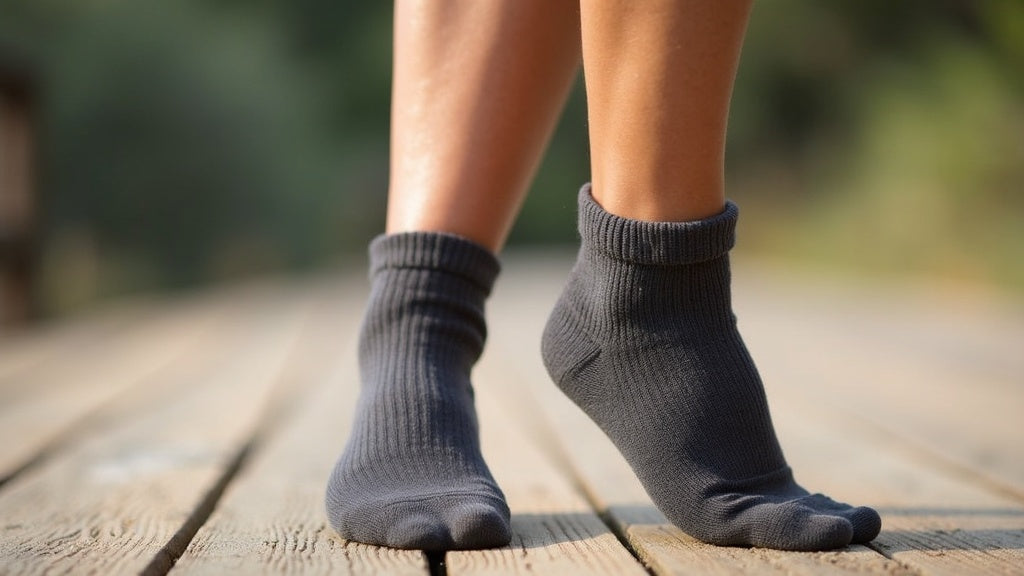

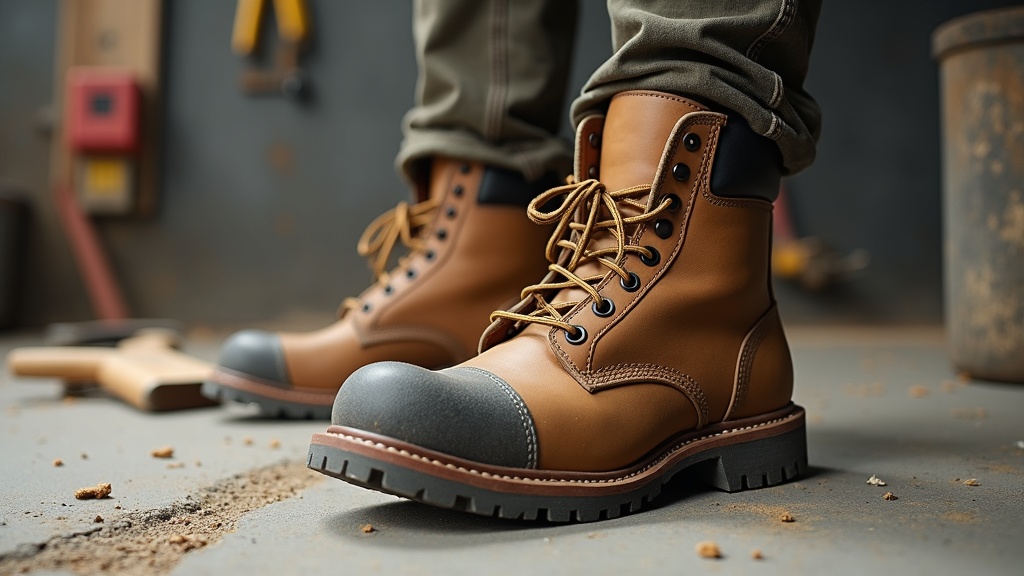
Your boots get all the credit. The sock underneath does all the suffering. Most workers replace their socks every few months because the toe blows out first, and they never stop to ask why.
Short answer: Reinforced toe socks have denser, double-knit fabric at the toe (and usually the heel), where boots wear socks out fastest. For work boots, pick a nylon-blend sock with a reinforced, seamless toe, cushioning at the heel and ball, and a height that suits your boots.
Reinforced toe socks exist to fix exactly that problem. They're built differently where it counts, and once you know what to look for, you won't go back to buying whatever's cheapest at the big box store.
Key points at a glance
- The toe box is the first zone to fail on any work sock, and reinforcement there is not optional on a real jobsite.
- Material blend matters: nylon, wool, and polyester each serve a different purpose in a quality work sock.
- Steel toe boots have a hard edge that chews through thin fabric fast. Cushion and fit both need to match the boot.
- Men and women have different fit needs, and the best brands now make gender-specific versions.
- A quality reinforced work sock, rotated properly, lasts far longer than a cheap pack.
- Price per wear almost always favors the more expensive sock. Cheap socks are not a bargain.
Why Reinforced Toe Socks Are Worth It
In this guide
- What 'Reinforced Toe' Actually Means (And Why Most Workers Don't Know)
- Why the Toe Box Takes the Most Abuse on the Job
- What to Look For Before You Buy: Materials, Cushion, and Construction
- Best Reinforced Toe Socks for Men on the Job: What to Pick
- MASON Reinforced Work Socks
- Best Reinforced Toe Socks for Women in the Trades
- Steel Toe Boots Specifically: What Makes a Sock Actually Fit Right
- How Long Should a Good Work Sock Last You?
- Common Questions Workers Ask About Reinforced Toe Socks
- Frequently asked questions
What 'Reinforced Toe' Actually Means (And Why Most Workers Don't Know)
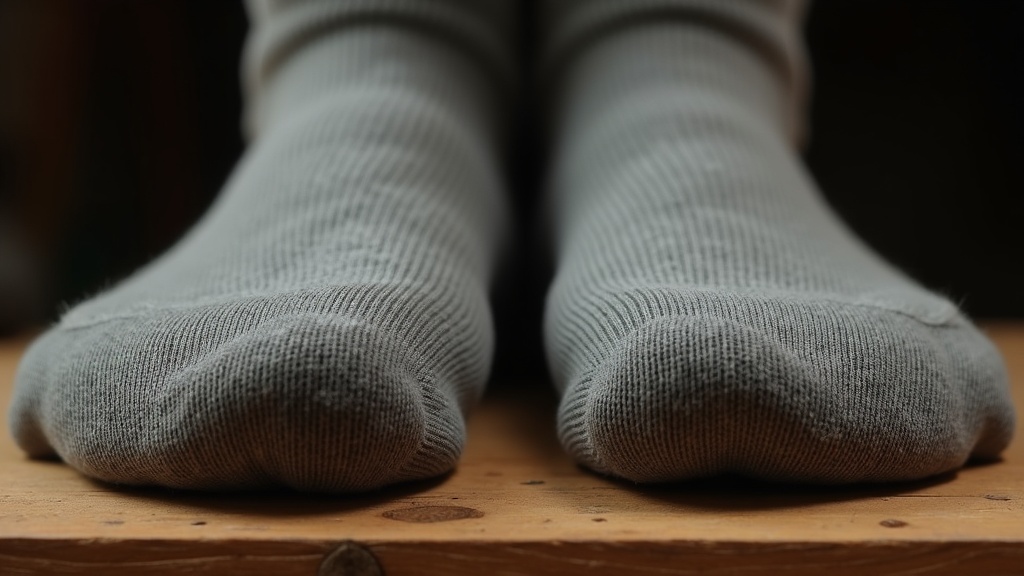
Most people think any thick sock is a reinforced sock. That's not how it works. True reinforcement means extra yarn is knit directly into the toe box, creating a denser weave in the zone that takes the most friction.
Some brands do this with nylon, some with wool, some with a tight-spun poly blend. The point is the same: double the material density right where your toes press against the inside of your boot every step you take.
Without it, a standard sock thins out at the toe in weeks. You end up with fabric so worn you can practically see daylight through it, and then a hole forms. It's not bad luck. It's physics.
Why the Toe Box Takes the Most Abuse on the Job
Every time you walk, your toes flex and push forward inside the boot. In a steel toe boot, that motion grinds the fabric against a hard metal or composite cap repeatedly, all day long.
Add kneeling, crouching, climbing ladders, or working on uneven ground, and that friction multiplies fast. The toe box sees more mechanical stress than any other part of the sock.
The heel is second. The arch rarely fails. That's why the best reinforced heel and toe socks focus material upgrades in those two zones specifically, not uniformly across the whole sock.
What to Look For Before You Buy: Materials, Cushion, and Construction
Fiber blend
Merino wool regulates temperature and resists odor naturally. Nylon adds tensile strength. Polyester wicks moisture. The best work socks for steel toe boots combine all three in a ratio that matches the climate you work in.
Cushion level
Light cushion works for warmer months or lighter boots. Heavy cushion is what you want for concrete floors, cold environments, or boots that run stiff. Look for the term "full cushion" or "heavy-duty cushion" on the label.
Construction details that actually matter
- Seamless toe closure: eliminates the ridge that causes blisters under a steel cap.
- Arch compression band: keeps the sock from bunching inside the boot mid-shift.
- Extended leg height: over-the-calf styles prevent the sock from sliding down during physical work.
- Moisture channel knitting: some premium brands knit in pathways that actively move sweat away from the skin.
| Material | Strength | Weakness | Best for |
|---|---|---|---|
| Merino Wool | Temperature regulation, odor resistance | Less durable alone, higher cost | Cold weather, all-day wear |
| Nylon | Abrasion resistance, structural strength | Traps heat, poor moisture management alone | Reinforcement zones |
| Polyester | Moisture wicking, fast drying | Odor builds up over time | Hot or humid environments |
| Cotton | Soft, breathable initially | Retains moisture, wears out fast | Light duty only, avoid in boots |
| Blend (Wool + Nylon + Poly) | Balanced performance across all categories | Variable quality depending on ratio | Daily work in steel toe boots |
Best Reinforced Toe Socks for Men on the Job: What to Pick
- Steel or composite toe boots: a seamless or flat toe closure with a reinforced toe, so there's no ridge under the cap.
- Concrete and long shifts: extra cushioning under the heel and ball, plus a reinforced heel.
- Tall boots: a 13 in or over-the-calf height that stays up.
- Hot sites: a lighter, fast-wicking blend that still has reinforced zones.
MASON Reinforced Work Socks
MASON, the work sock brand, makes Tradesman Socks (8 in) and Tradesman Boot Socks (13 in) from 56% bamboo lyocell, 38% nylon and 6% spandex, with Cloud Cushioning under the heel and ball of the foot and an Arch Strap that stops the sock bunching. Tradesman Socks have reinforced construction at the heel and toe, and the Boot Socks have a flat-knit seamless toe. Pick the 8 in crew for standard boots or the 13 in boot sock for tall boots, and see the sock packs for a full-week rotation.
Best Reinforced Toe Socks for Women in the Trades
For years women were told to buy men's socks in a smaller size. That leaves extra fabric that bunches and causes blisters, especially under a steel cap. Look for reinforced toe socks sold in women's sizes with a snug heel and arch, and check the fit in your actual work boots.
Steel Toe Boots Specifically: What Makes a Sock Actually Fit Right
Steel toe and composite toe boots have a hard interior shelf right where the cap ends. That edge is where most toe holes start. A sock that's even slightly too long will fold against that edge and wear through in days.
Sizing matters more here than in any other footwear. Buy socks sized to your actual shoe size, not a range. A sock labeled "size 9-12" that you buy for a size 9 foot will bunch inside a steel cap and create pressure points.
Also: seamless toe construction is not optional for steel toe work. A sewn seam running across the toe box becomes a pressure ridge inside a hard cap. After eight hours, that's a blister waiting to happen.
How Long Should a Good Work Sock Last You?
It depends on the sock, your boots and how you treat it. A reinforced sock worn on rotation and washed cool lasts far longer than a cheap pack that thins at the toe in weeks, so the better sock usually wins on cost per wear.
Rotation is the other half of the equation. Washing and fully drying socks between wears preserves elasticity and fiber strength. Replace a pair when the heel or toe goes thin, the cushioning flattens, or the cuff stops holding up.
Common Questions Workers Ask About Reinforced Toe Socks
A few points come up constantly among workers buying these for the first time, or switching from whatever they've been using.
Can you wear reinforced socks with any boot?
Yes, though heavy cushion socks take up more volume. If your boot fits snugly already, move up half a size or choose a medium-cushion version of the same sock.
What about compression or diabetic needs?
Several brands now offer reinforced work socks with graduated compression built in. If you have circulation concerns, look specifically for socks labeled as both reinforced and lightly compressive, typically 15 to 20 mmHg.
Your buying checklist before you order
- Confirm the sock size matches your shoe size exactly, not a range.
- Check for seamless toe construction if you're wearing steel or composite caps.
- Choose cushion weight based on your climate and boot stiffness.
- Buy at least four pairs at once. Rotation is not optional if you want them to last.
- Look for nylon content of at least 15 to 20 percent in the reinforced zones.
- If you run hot, prioritize polyester or merino-poly blends over pure merino.
The sock is not a small purchase. It's the one piece of gear between your foot and 10 hours of concrete, steel, and friction. Spend a little more on a good pair. Your feet will tell you the difference by noon.
Frequently asked questions
What makes reinforced toe socks different from regular work socks?
Are reinforced toe socks worth the higher price?
What are the best socks for steel toe boots specifically?
Do women need different reinforced toe socks than men?
How many pairs of work socks should I own?
What fiber content should I look for in heavy duty cushioned work socks?
Want more workwear guides like this in your Google results? Add trymasonco.com as a preferred source.
Next, see why steel toe boots need the right socks.
