
Your knees have been complaining for months. Every rung up a ladder sends a dull ache through the joint. By the end of the shift, you're walking stiff. You've been chalking it up to age or the job, but the real problem is what's happening between your boot and the ground with every single step.
Short answer: Insoles can ease knee pain from climbing ladders by supporting the arch and steadying the heel, which helps keep your knee in line on every step. Pick a firm arch that holds on rungs and cushioning for concrete, and see a GP if knee pain doesn't improve within a few weeks.
The right insole can change that. Not overnight, not magically, but structurally. This guide covers what actually works for electricians who climb, stand, and hustle on hard surfaces all day long.
Key points at a glance
- Ladder climbing puts a load of 3 to 6 times your body weight through your knee joint on every step up.
- Most work boot insoles are flat foam slabs that offer almost zero arch support or shock absorption.
- Insoles with a deep heel cup and firm arch support are the most effective for knee pain in tradesmen.
- Worn-out insoles are invisible from outside the boot but cause serious damage over months.
- Insoles alone won't fix a structural knee problem, but they reduce daily stress significantly.
- Fit inside the boot matters as much as the insole itself. A poor fit cancels the benefits.
What a good insole does for your knees
In this guide
- Why Electricians Get Knee Pain From Climbing (It's Not Just Bad Luck)
- Can Insoles Actually Relieve Knee Pain, or Is That Just Marketing?
- What to Look For in an Insole When You're Climbing All Day
- The Worst Thing You Can Do for Bad Knees on the Job
- Top Insoles for Ladder Work and Long Shifts: What to Pick
- When Knee Pain Needs a Doctor
- Can You Keep Working as an Electrician With Bad Knees?
- How to Get the Right Fit in Your Work Boots
- When Insoles Aren't Enough: Other Things That Help
- Frequently asked questions
Why Electricians Get Knee Pain From Climbing (It's Not Just Bad Luck)
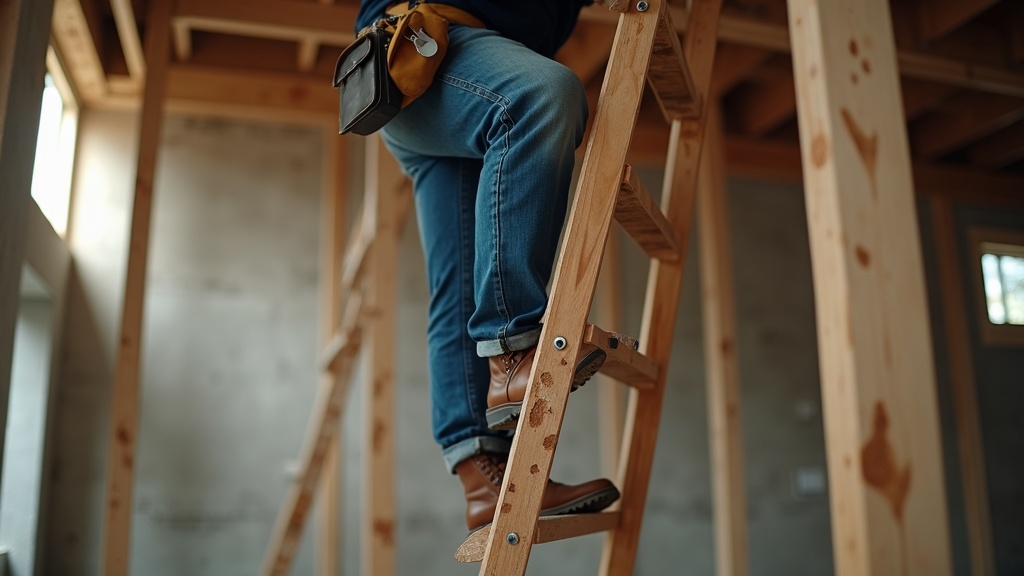
Every time you step up a rung, your quads and knee joint carry a load that's roughly three to six times your body weight. Do that 80 times a day, five days a week, and the math gets brutal fast.
Electricians aren't just climbing ladders. They're crouching in crawl spaces, kneeling on concrete, and standing on hard warehouse floors between climbs. The knee never fully rests during a shift. Add a flat, compressed insole that stopped absorbing anything six months ago, and you're running a machine with no shock dampening.
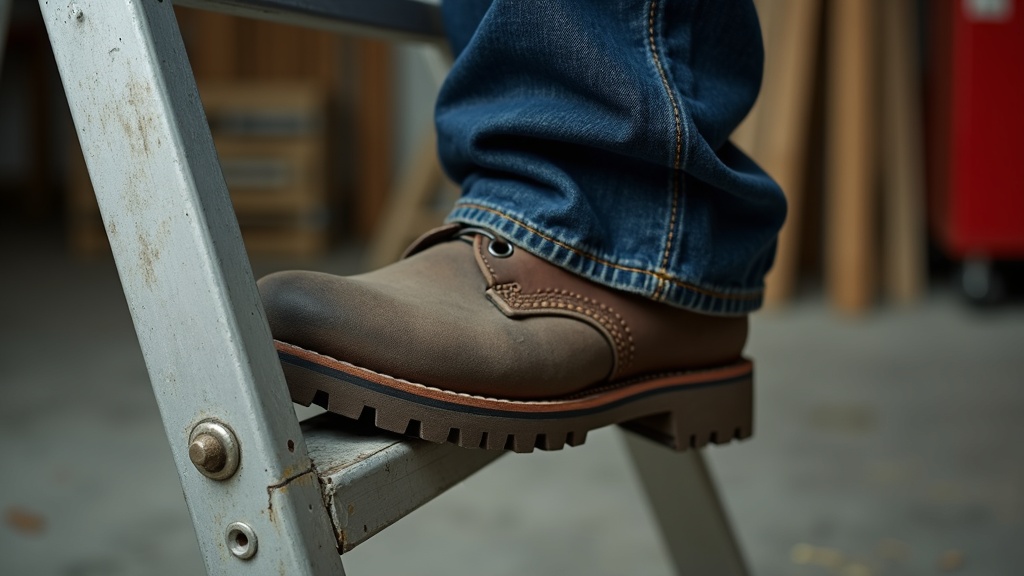
The other factor is foot pronation. A lot of guys overpronate (the foot rolls inward), which pulls the knee slightly inward too. Over a full shift, that misalignment grinds the inside of the knee joint every single step.
Can Insoles Actually Relieve Knee Pain, or Is That Just Marketing?
Fair question. The short answer: yes, for a specific type of knee pain. Studies on workers in physically demanding trades show that orthopedic insoles reduce knee stress by improving alignment and cushioning impact. They're not a cure for a torn meniscus or advanced arthritis.
What they fix: knee pain caused by poor foot mechanics, excessive impact on hard surfaces, and fatigue-related alignment breakdown. That covers a lot of electricians.
What to Look For in an Insole When You're Climbing All Day
Not every insole on a pharmacy shelf is built for a guy putting in ten-hour days on hard floors and metal ladders. Here's what actually matters.
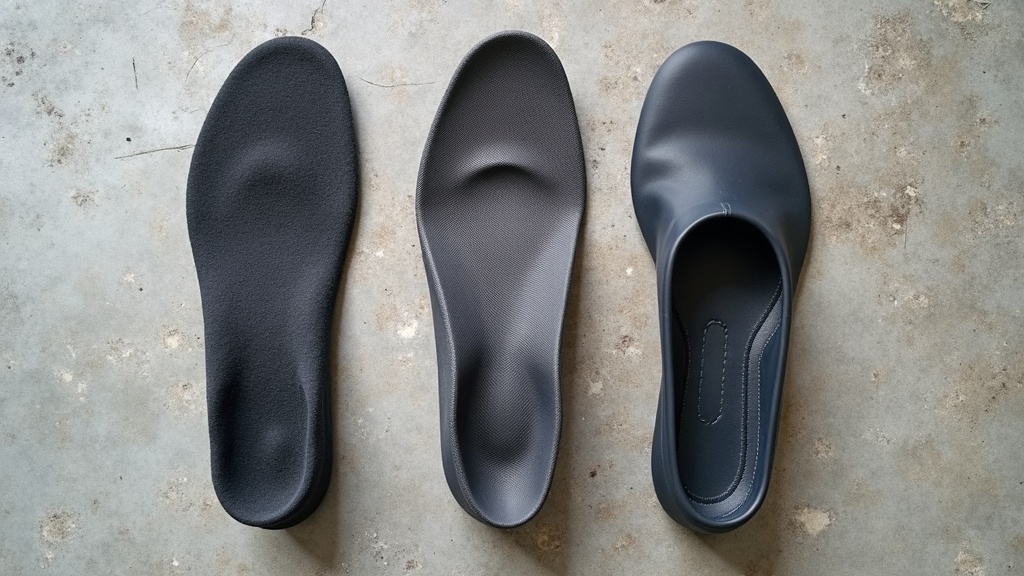
Deep heel cup
This cradles your heel and stops it from rolling. It's the single biggest factor in knee alignment. A flat insole does nothing here.
Firm arch support
Soft gel arches compress under load and bottom out by noon. You want semi-rigid or rigid arch support, usually polypropylene or carbon fiber shell. It holds its shape under a 200-pound guy on a ladder.
Shock-absorbing top layer
EVA foam or polyurethane on top of that firm shell absorbs the impact so your knee doesn't have to. The firmness and cushion work together, not instead of each other.
Correct thickness for your boot
A thick insole in a narrow work boot turns a snug fit into a painful squeeze. Measure the space before you buy.
The Worst Thing You Can Do for Bad Knees on the Job
Keep wearing the insole that came stock with your boots. Those flat foam slabs are fine for a retail shift. They're not built for repeated ladder climbing on concrete.
Second worst: buying a soft gel insole and thinking that handles it. Gel cushions impact but does zero for alignment. Your knee still tracks wrong every step. You've just padded the punishment.
- Don't push an insole past six months of daily use. They compress and lose function long before they look worn out.
- Don't buy insoles without removing the stock insert first. Stacking them creates pressure points.
- Don't assume both feet need the same insole. Many people have asymmetrical arches.
Top Insoles for Ladder Work and Long Shifts: What to Pick
- Climbing all day: a firm arch that doesn't fold over a rung, and a heel cup that keeps the heel steady.
- Long hours on concrete between climbs: extra heel and forefoot cushioning.
- Flat feet or knees that cave in: firmer arch support to keep the foot from rolling inward.
- Tight boots: a slimmer insole that stays thin at the toe.
When Knee Pain Needs a Doctor
The NHS advises seeing a GP if knee pain doesn't improve within a few weeks, and getting urgent advice from NHS 111 if your knee is very painful, you can't put weight on it, it's badly swollen or has changed shape, or it locks, gives way or painfully clicks.
Can You Keep Working as an Electrician With Bad Knees?
Most guys do, for years. The key is not letting the pain become structural damage. Knee pain from impact and poor alignment is mechanical. Catch it early, manage it right, and you stay on the job.
Ignore it, and you're looking at patellar tendinitis, IT band syndrome, or cartilage wear that eventually puts you on the bench. Insoles are part of managing it early. So is talking to a doctor before the pain becomes a diagnosis.

How to Get the Right Fit in Your Work Boots
An insole that doesn't fit the boot is useless or worse. Here's the process:
- Pull out the stock insole first. Place your new insole on top of it and compare. If the new one is significantly thicker, you may need a half size up in the boot or a slimmer insole profile.
- Check toe box clearance. Your toes need about a thumb's width of room when the insole is in and you're standing. On a ladder, your foot moves forward slightly. No clearance means black toenails.
- Walk in them for 15 minutes before committing. Many stores let you try them in the aisle. Your arch should feel supported but not like something is jabbing you. Firm is fine. Painful is a wrong size.
- Replace every six months if you're putting in full-time hours. Mark the date on the insole with a marker so you don't guess.
When Insoles Aren't Enough: Other Things That Help
Insoles address mechanics. Knee pain often has more than one cause. These additions make a real difference when you combine them.
Knee compression sleeves
A sleeve keeps the joint warm and provides light proprioceptive feedback, meaning your knee senses its position better and tracks more consistently.
Stretching the hip flexors and quads
Tight quads pull on the kneecap. Five minutes of quad and hip flexor stretching in the morning and at lunch breaks the tightness cycle. This is the one thing most tradesmen skip and most physios recommend first.
Anti-fatigue mat for extended stationary work
When you're standing at a panel for an hour, a portable anti-fatigue mat gives your feet and knees a break without changing anything about how you work.
Boot upgrade
If your boots are more than two years old, the midsole is likely dead. No insole compensates for a collapsed midsole. At that point, new boots with a quality aftermarket insole is the right move.
Start with the insole. Add the sleeve if the joint is warm or swollen after shifts. See a doctor if the pain is sharp, localized inside the joint, or doesn't improve in four to six weeks with proper support. Those are the three steps, in that order.
Frequently asked questions
How quickly will insoles relieve my knee pain from climbing ladders?
Are over-the-counter insoles good enough, or do I need custom orthotics?
Can insoles help with hip pain as well as knee pain?
How do I know if my current insoles are dead?
Do insoles work in steel-toe boots specifically?
Should I wear insoles in both boots even if only one knee hurts?
Want more workwear guides like this in your Google results? Add trymasonco.com as a preferred source.
