
To get the smell out of work boots, dry them fully after every shift, wash or replace the insoles, clean the lining, and deodorize them overnight with baking soda or foot powder. Then keep the smell from coming back: wear a fresh pair of socks each day and don't wear the same boots two days in a row.
This guide walks through each step, from a quick overnight fix to a deep clean, and explains when a pair of boots is past saving.
Key takeaways
- Boot smell comes from sweat and bacteria trapped in the lining and insole.
- Drying boots fully between shifts does more than any spray or powder.
- Insoles hold a lot of the smell, so wash them or replace them.
- Rotating two pairs of boots and changing socks daily stops the smell from building back up.
In this guide
Why do work boots smell?
Work boots smell because sweat soaks into the lining and insole, and bacteria feed on it inside the warm, closed boot. The NHS names "a build-up of sweat and bacteria" as one of the main causes of smelly feet (NHS, Smelly feet, reviewed July 2025).
Work boots make the problem worse than regular shoes. They're padded, laced tight and often waterproof, so little air gets in during a shift. The NHS also lists standing all day and hot weather among the things that make feet sweat more. If the sweat doesn't dry out before the next shift, the smell keeps building.
That's why the fixes below focus on two things: getting moisture out of the boot, and putting less sweat into it.
Step 1: Dry your boots fully after every shift
Drying your boots fully between shifts is the single most useful step against boot smell. The NHS advice is simple: "let shoes dry out before wearing them again".
- Open the boot up: loosen the laces, pull the tongue forward and take out the insoles.
- Give it air: stand the boots upright in a dry, ventilated room, not in a truck cab or a closed locker.
- Speed it up: use a boot dryer on a low setting, or stuff the boots with newspaper and change it when it's damp.
- Skip direct heat: a radiator, heater or fire can crack leather and weaken the glue that holds the sole.
Step 2: Rotate two pairs of work boots
Rotating two pairs of work boots gives each pair a full day to dry out. The NHS advises: "do not wear the same socks or shoes 2 days in a row". One night is often not enough for a padded, waterproof boot to dry all the way through.
A second pair also spreads the wear, so both pairs last longer. If a second pair isn't an option, dry the insoles separately each night and use a boot dryer.
Step 3: Wash or replace the insoles
Insoles sit right under the sweatiest part of your foot, so they soak up a lot of sweat and smell. Removable insoles are often the easiest part of the boot to clean.
- Wash them: hand-wash removable insoles in warm water with a little mild soap, rinse, and let them air dry fully before you put them back.
- Replace them: if an insole still smells after washing, or it's flat and cracked, swap it for a new one.
The NHS also mentions medicated insoles, which a pharmacist can recommend. For timing, see how often to replace work boot insoles. For insoles that handle sweat, see moisture-wicking insoles for sweaty feet.
Step 4: Clean the inside of the boot
To clean the inside of a work boot, wipe the lining with a damp cloth and a little mild soap, then let the boot dry completely. Work from the toe back to the heel and don't soak the boot.
- Check the care label first: leather, synthetic and waterproof boots each have their own care instructions.
- Keep leather boots out of the washing machine: machine washing can damage the leather, the glue and any waterproof lining.
- Dry before you wear them: a boot that's still damp inside starts the smell cycle again.
Step 5: Deodorize your boots overnight
Baking soda, foot powder and boot deodorizers help with what's left once the boot is dry and clean.
- Baking soda: sprinkle a spoonful into each dry boot, leave it overnight, then shake it out before your shift.
- Foot powder or foot deodorant: the NHS lists foot powder and foot deodorant among the things that help with smelly feet.
- Boot sprays and inserts: these can freshen a boot between deep cleans, but they don't replace drying it.
Deodorizers work best on a dry boot. On a damp boot, powder clumps and the smell comes back by the end of the next shift.
Step 6: Stop the smell at the source: your feet and socks
Less sweat in the boot means less smell, so foot care and socks are the long-term fix. The NHS advises washing your feet at least once a day and not wearing the same socks two days in a row.
- Wash and dry your feet: dry well between the toes before you put socks on.
- Wear a fresh pair each shift: a sock that's damp from yesterday puts sweat straight back into the boot.
- Pick socks that move sweat: socks made to pull sweat away from the skin and dry between shifts keep less moisture in the boot.
- Carry a spare pair: on long or hot shifts, changing socks at lunch helps.
The guide to socks for smelly feet in work boots covers fabrics in detail. The guide to foot odor prevention in work boots covers daily foot care.
Step 7: Know when to replace the boots
Replace your work boots if they still smell after full drying, a clean lining and new insoles. At that point, sweat has usually soaked deep into the padding and foam, where cleaning can't reach. Boots with a split lining, a cracked sole or flattened support are due for replacement anyway.
See how often you should replace work boots for the other signs. If your feet still smell after you've treated them yourself, the NHS advises seeing a GP. In the US, that means your doctor or a podiatrist.
Socks that help keep boots fresher
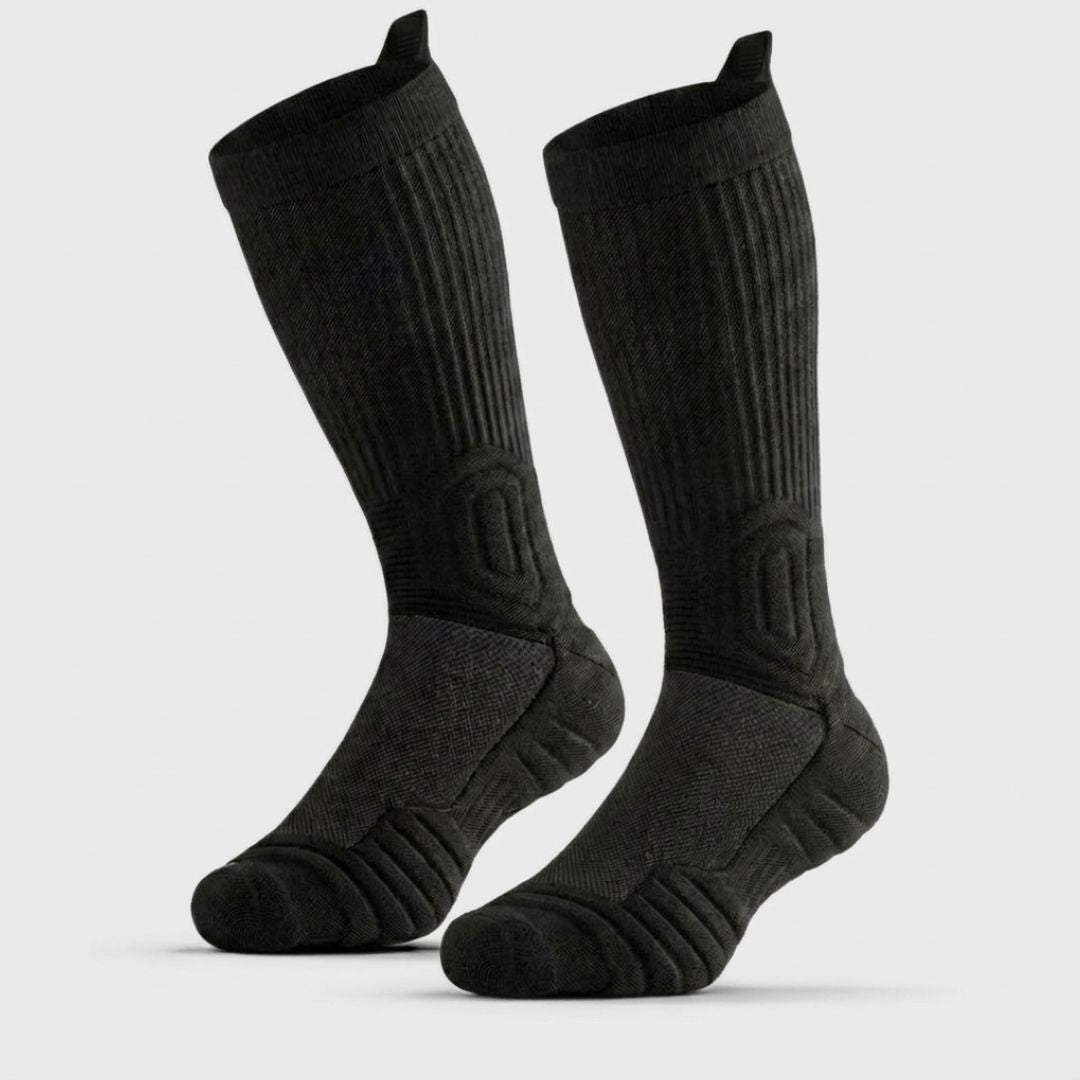
Tradesman Socks from MASON, the work sock brand, are made for long shifts in work boots. The blend is 56% bamboo lyocell, 38% nylon and 6% spandex, with mesh ventilation zones, a cushioned sole and heel, and a reinforced toe and heel.
Customers who wear them in boots have written about the smell. "Made my boots stink go away. No more smelly feet in boots." (Jan-Michael C., verified buyer, Judge.me review, 22 October 2026). Another wrote: "Really wanted them to help with my feet sweating while I wear my boots and they definitely helped. No more stinky boots." (Ryan I., verified buyer, Judge.me review, 3 October 2026)
For tall boots, Tradesman Boot Socks rise 13 in. For worn-out insoles, the Tradesman Cushion Insole is a replacement insole made for work boots. Every pair of socks comes with a 99-day money-back guarantee and a lifetime warranty. See all work socks.
Frequently asked questions
How do you get the smell out of work boots fast?
What gets rid of the smell in boots?
Why do my feet stink so bad in boots?
Can you put work boots in the washing machine?
Does baking soda get rid of boot smell?
How do you keep work boots from smelling?
Want more workwear guides like this in your Google results? Add trymasonco.com as a preferred source.
Next, see the guide to socks for smelly feet in work boots.
