
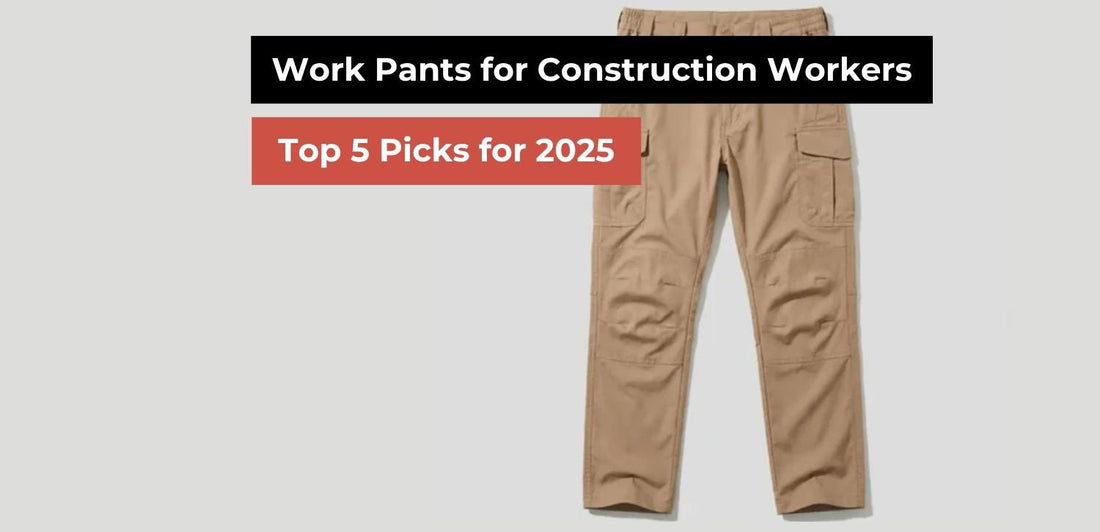

Construction is one of the most physically demanding industries in the world. According to the U.S. Most pants fail before the shift ends — the seams split, the pockets tear, or the fabric stiffens in the cold.
Short answer: The best work pants for construction workers have reinforced or double-layer knees, triple-stitched seams with bar tacks, a gusseted crotch, tool pockets you can reach mid-task, and a fabric weight that suits the season: canvas or duck for rough work, ripstop or stretch blends for heat and mobility.
Choosing the best work pants for construction workers isn't about brand names or trends. It's about matching the right construction to the real conditions of your job site. This guide shows you what to look for in each work environment, so you can make the right call without wasting time or money.
In this guide
What Makes a Work Pant Good for Construction?

Not all work pants are built equal — and on a construction site, the difference between a good pair and a bad one shows up fast. Here are the four criteria that actually matter in the field:
1. Knee reinforcement. Concrete, gravel, rough subfloors — your knees take a beating daily. A pant without reinforced knee zones wears through in weeks, not months.
2. Cargo pocket placement. Pockets positioned too low or too far back force you to bend or stop moving to access your tools. The best designs keep essentials reachable mid-motion.
3. Fabric weight vs. breathability. Heavy-duty canvas handles abrasion but traps heat in summer. Lightweight ripstop breathes well but may lack durability for rough surfaces. The right choice depends on your season and climate.
4. Waistband flexibility. Squatting, climbing ladders, stepping over obstacles — a rigid waistband restricts movement and causes fatigue over a long shift. An articulated or stretch waistband makes a real difference by end of day.
These aren't marketing features. They're the details that separate a pant that lasts one season from one that lasts three.
Check out this guide too: What to Wear for Warehouse Work: Complete Guide for Safety & Comfort
Construction Work Pant Fabrics Compared
- Cotton duck or canvas: tough and abrasion-resistant, stiff at first and warm in summer. Best for rough outdoor work.
- Ripstop: a grid weave that stops small tears spreading. Lighter and cooler than canvas.
- Stretch blends: cotton or nylon with a little elastane for climbing, squatting and kneeling. Check the knees are reinforced.
- Insulated or lined: for winter sites; make sure you can still squat and climb in them.
- Flame-resistant (FR): only if your work needs it, such as welding or electrical work with arc-flash risk. Check the rating your employer requires.
How to Choose Based on Your Job?
The best work pants for construction workers depend entirely on what your day actually looks like. Use this quick reference to match your situation to what to look for:
What to look for
- Year-round heavy outdoor work: reinforced heavy-duty fabric with reinforced stitching at every stress point (knees, seat, pocket openings).
- Cold-weather or winter job sites: thermal insulation thin enough to allow full range of motion.
- Hot summer outdoor sites: breathable lightweight fabric with reinforced pocket zones and durable stitching.
- High-mobility tasks in warm weather: a lightweight cargo design with deep, secure pockets and an unrestricted cut.
- Indoor finishing & interior work: lightweight, flexible and comfortable across long indoor shifts.
One common mistake workers make is buying a single pair for all conditions. A framer working a winter exterior site and a trim carpenter finishing interiors in July have completely different needs — and one pant can't cover both without compromising somewhere.
If your job shifts between seasons or roles, consider keeping two pairs: one heavy-duty option for rough conditions, and one lightweight model for warmer or lower-risk environments. The cost of replacing worn-out pants every few months outweighs the upfront investment in the right pair from the start.
Check out this guide too: Best Work Boots for Walking All Day: Comfort and Support Guide
Your Job Site Deserves Better Than Average Pants
Construction work punishes poor gear fast. The right pair of work pants isn't a luxury — it's a tool, the same as your boots or your belt. Whether you're breaking ground in January or finishing interiors in August, choose a pair built for exactly what your day demands.
The best work pants for construction workers aren't the most expensive ones or the most advertised — they're the ones still holding up six months in, when cheaper options have already been thrown out. Find the pair that matches your job site, your season, and your trade. Pair your boots with cushioned work socks, like MASON work socks.
Socks and Boots Finish the Setup
Good work pants and good boots still leave your feet in the hardest spot. Pick socks tall enough to clear your boot collar under your pant leg, with cushioning at the heel and ball. MASON, the work sock brand, makes Tradesman Socks (8 in) and Tradesman Boot Socks (13 in) from 56% bamboo lyocell, 38% nylon and 6% spandex, with Cloud Cushioning under the heel and ball of the foot and an Arch Strap that stops the sock bunching.
Quick Checklist Before You Buy Construction Work Pants
- Double-layer or knee-pad-pocket knees
- Triple-stitched seams and bar tacks at pocket corners
- A gusseted crotch so the seat doesn't pull when you squat
- Tool, hammer-loop and phone pockets where you actually reach
- A fabric weight that suits the season
- Hi-vis or flame-resistant ratings if your site requires them
For fabric and construction details, see durable work pants for heavy duty jobs.
Frequently Asked Questions
Which work pants have the best tool storage for construction?
Look for reinforced cargo pockets on the thigh, holster pockets at the hip, a hammer loop and a dedicated phone or tape pocket. Bar-tacked pocket corners stop heavy tools from tearing them out.
Are cargo pants good for construction work?
Yes — but only if the pocket placement and fabric construction match jobsite demands. A cargo pant with shallow, poorly positioned pockets creates more frustration than convenience on an active site. Look for deep side pockets placed at mid-thigh level, reinforced tool loops, and secure closures that prevent tools from falling during movement.
What fabric is best for construction work pants?
It depends on your conditions. Heavy-duty canvas or ripstop fabric handles abrasion and rough surfaces best for year-round outdoor work. For summer sites, lightweight technical fabrics that combine breathability with reinforced stress zones offer the best balance. Avoid standard cotton blends — they absorb moisture, lose shape quickly, and wear through fast under construction conditions.
How often should construction workers replace their work pants?
It depends on the work, but a well-built pair with reinforced knees and bar-tacked seams should last far longer than a cheap pair. If yours are tearing at the knees or crotch within a few months, they aren't built for your job site.
Want more workwear guides like this in your Google results? Add trymasonco.com as a preferred source.
Next, see durable work pants for heavy duty jobs.
