

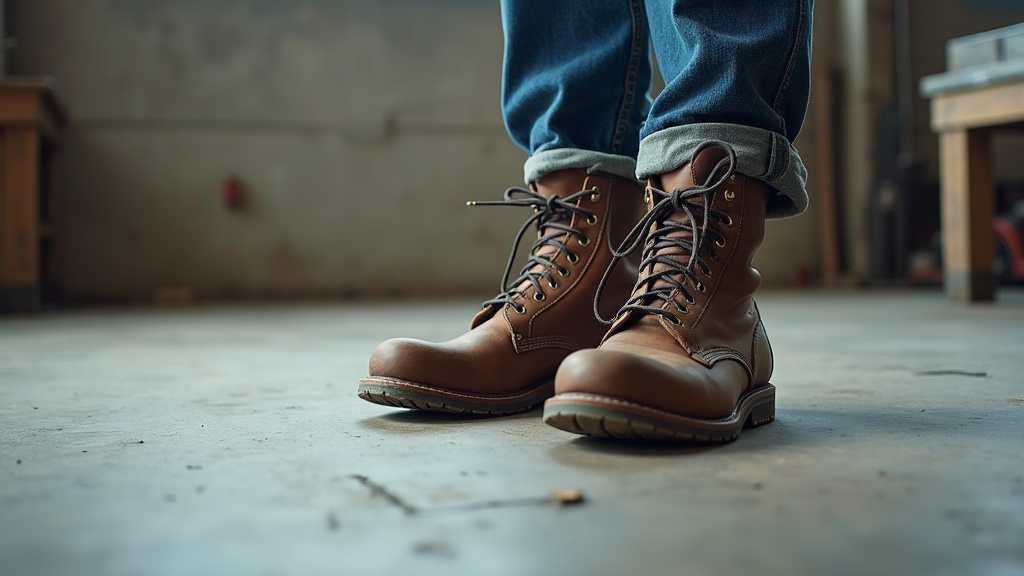
You clock in at 6 AM. By early afternoon your feet are burning, your heels are raw, and you're shifting your weight just to get through the last few hours. Most guys blame their boots. The boots are rarely the problem.
Short answer: The best everyday socks for workers on their feet all day are cushioned under the heel and ball of the foot, made from a wicking blend instead of cotton, reinforced at the heel and toe, and the right height for your shoes or boots. Rotate enough pairs for a clean pair every shift.
The right sock changes everything. Wrong thickness, wrong fiber, wrong fit and good boots feel like a punishment. This guide cuts straight to what works, what holds up, and what's actually worth your money.
Key points at a glance
- Socks cause more foot pain on the job than most people think.
- Merino wool and wool-synthetic blends outperform pure cotton for all-day wear.
- Crew height is the gold standard for blue-collar work; ankle socks work for light-duty and warehouse roles.
- A cheap sock that wears through in weeks can cost more per shift than a good one.
- Rotate enough pairs for a clean pair every shift.
- Comfort socks and work socks aren't the same thing: work socks need reinforced heels and toes.
What a great work sock does for you
In this guide
- Why Your Socks Are Making Your Feet Miserable by 3 PM
- What Actually Matters in an Everyday Work Sock (Forget the Marketing)
- Best Everyday Socks by Height: Crew, No-Show and Boot
- Comfort Socks vs Work Socks: What's the Difference?
- Best Everyday Socks for Women in the Trades
- When a Synthetic Sock Beats Wool or Bamboo
- How Many Socks Do You Actually Need, and How Long Should They Last?
- The Bottom Line: What to Buy Based on Your Job
- Frequently asked questions
Why Your Socks Are Making Your Feet Miserable by 3 PM
Cotton holds moisture. That's the whole story. You sweat, the sock gets wet, it bunches, and now you've got a damp cloth grinding against your skin for six hours straight. Blisters, hot spots, and foot odor are all downstream of that one problem.
A cheap cotton sock loses its cushion within a few hours of wear. The fibers flatten out, the padding disappears, and you're essentially standing on a thin layer of damp fabric over a hard insole.

What Actually Matters in an Everyday Work Sock (Forget the Marketing)
Brands love to throw words like "performance" and "engineered comfort" at you. Here's what actually matters when you're buying work socks.
Fiber content
- Merino wool: a strong all-around fiber. Warm when damp, moisture-wicking, and it absorbs odor that washes out. Works in summer and winter.
- Wool blends (wool + nylon + spandex): more durable than pure merino, slightly less soft, great for tough work environments.
- Synthetic blends (polyester + nylon): durable and affordable, decent moisture management, but they hold odor over time.
- Cotton: fine for casual use, poor for all-day standing work. Avoid as the primary fiber in a work sock.
Cushioning level
Medium cushion is the sweet spot for most workers. Heavy cushion feels great but makes your boot fit tighter. Light cushion works if your boot already has a thick insole.
Height
Crew height (mid-calf) protects your ankle and lower leg from boot chafing. Ankle height is fine for low-cut work shoes or light warehouse duty. Quarter height is the minimum for any boot work.
Best Everyday Socks by Height: Crew, No-Show and Boot
The best everyday socks for people on their feet all day match the height to your footwear, wick sweat and put cushion under the heel and ball of the foot.
Best crew socks for work shoes and mid boots
A crew sock (around 8 in) covers the ankle above most work boot collars. MASON Tradesman Socks are the everyday crew pick, made from 56% bamboo lyocell, 38% nylon and 6% spandex, with Cloud Cushioning under the heel and ball of the foot and an Arch Strap that stops bunching.
Best no-show socks for low work shoes
A no-show sock suits safety trainers, low work shoes and hot days, as long as it covers the heel so the shoe doesn't rub. Tradesman No-Show Socks (2 in) sit below the ankle with the same blend.
Best boot socks for tall boots
Tall lace-up and steel toe boots need a sock above the collar. Tradesman Boot Socks (13 in) keep the boot from rubbing your shin, and Tactical Socks suit duty and outdoor boots.
Customer ratings on MASON's Judge.me reviews (November 2026): Tradesman Socks 4.8 out of 5 from 561 reviews, Tradesman Boot Socks 4.8 from 191, Tradesman No-Show Socks 4.9 from 149, Tactical Socks 4.8 from 54.
Comfort Socks vs Work Socks: What's the Difference?
Comfort socks are built for soft everyday wear, while work socks are built for friction, sweat and impact inside boots. For retail, food service or light warehouse work, a comfortable everyday sock can be enough. For construction, heavy lifting or long shifts in safety boots, look for a reinforced heel and toe, cushion where the boot hits, a wicking blend and an arch band that holds the sock in place.
Best Everyday Socks for Women in the Trades
Women's work socks used to mean men's socks sized down, with the heel in the wrong place and the sock sliding all day. Look for socks sized for women's feet, with a snug heel and an arch band, in the height that clears your boot collar.
When a Synthetic Sock Beats Wool or Bamboo
Natural and natural-derived fibers aren't the answer for every job. If you work in a wet environment, power washing or near chemicals, a high-nylon synthetic work sock dries fastest and shrugs off rough washing. For dry sites, warehouse floors and sweaty feet in boots, a wicking bamboo-derived or merino blend feels fresher over a long shift.
How Many Socks Do You Actually Need, and How Long Should They Last?
You need one clean pair for every shift plus a few spares for laundry timing, so seven to ten pairs is a practical number for a five-day week. Wearing the same pair two days running keeps sweat in the fabric.
How long work socks last depends on the blend, the boots and how you wash them. Wash in cold water and air dry when possible: high heat is what kills elastic and shrinks wool. Replace a pair when the heel or toe goes thin or the cushion flattens. MASON sock packs make a full rotation easier.
The Bottom Line: What to Buy Based on Your Job
- Construction, roofing, heavy trades: a crew or boot-height sock with medium cushion and a reinforced heel and toe.
- Warehouse, shipping, light manufacturing: crew socks with safety boots, no-show socks with safety trainers.
- Outdoor work in cold weather: a heavier wool blend that stays warm when damp.
- Tight budget: buy a multi-pack and rotate, so every pair dries between shifts.
- Women in the trades: women-specific sizing, not a unisex small.
Your feet carry you through long days. A sock that fits, wicks and lasts is the cheapest comfort upgrade you can make.
Made in the USA: Darn Tough Vermont Hiker Micro Crew: made in Vermont from merino wool, with an unconditional lifetime guarantee.
Frequently asked questions
What are the best everyday crew socks for men who work on their feet all day?
Are merino wool socks actually worth the price for blue-collar workers?
What socks don't wear out fast?
What are the best ankle socks for work in low-cut shoes?
How many pairs of work socks do I actually need?
Are comfort socks good for construction or heavy trades work?
Want more workwear guides like this in your Google results? Add trymasonco.com as a preferred source.
Next, see the best work socks for every job.
